
Quick comparison that actually matters
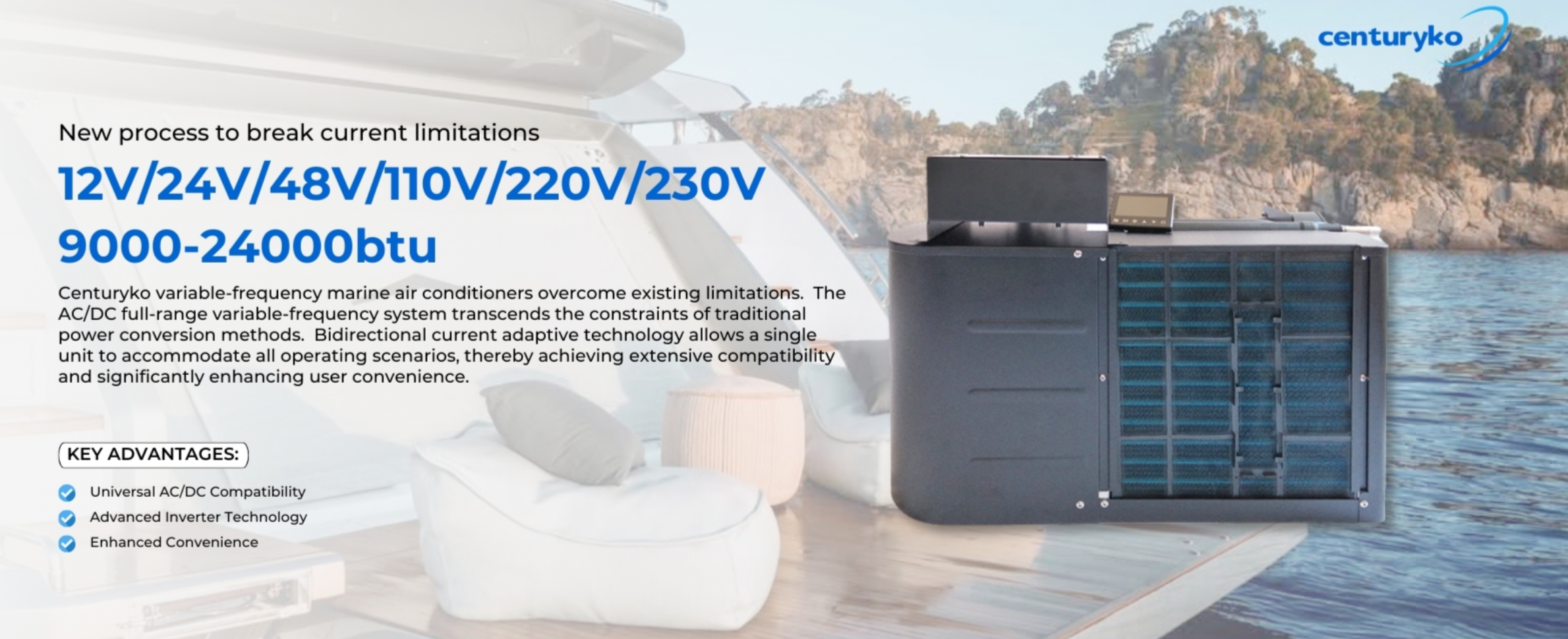
Boats in busy places like the Port of Singapore demand aircon that survives salt spray and tight bilge space, not just boasts big numbers — steady one, not flash. This comparative piece looks at how changes to shell-and-tube condensers shift real outcomes for industrial-grade 12V boat air conditioners, and why savvy captains pick one layout over another. For practical sourcing, check manufacturers early — marine air conditioner manufacturers often specify tube metallurgy, pass arrangement and shell baffling up front. We’ll also mention how proper marine heating and air conditioning choices affect long-term uptime.
Core structural differences and their operational effects
Shell diameter, tube count, and pass arrangement are not decorative — they set heat transfer area, pressure drop, and refrigerant velocity. A two-pass tube bundle gives higher refrigerant velocity and faster condensation but raises pressure drop and compressor load. Multi-pass, small-diameter tubes favor compactness and quick heat transfer; single-pass, larger tubes cut friction and fouling risk. Industry terms like heat exchanger, tube bundle and baffle show up here because they’re the levers you tweak for performance.
Materials and corrosion trade-offs
Copper-nickel tubes are common for their thermal conductivity, but titanium wins for long-term corrosion resistance in seawater-cooled condensers — albeit pricier. Tube sheet design and shell coatings also alter galvanic behaviour. Choose material with an eye on lifetime service intervals; maintenance in tropical waters is expensive, and replacement parts sometimes take weeks to ship lah.
Comparative breakdown: what to balance
Look at these concrete comparisons when you evaluate options:
– Thermal capacity vs size: More tube surface area raises capacity but expands shell size and weight. – Pressure drop vs compressor strain: Tighter passages cool faster but increase amp draw on a 12V system. – Fouling tolerance vs maintenance schedule: Wider tubes reduce clogging; tighter bundles need more frequent flushing.
Design features that change outcomes — real examples
Baffle spacing controls shell-side flow distribution. Closer baffles improve turbulence and heat transfer; wider spacing reduces local corrosion by lowering shear. Tube pitch affects how sea water flows between tubes — closer pitch ups heat transfer but traps debris more easily. Think of these as knobs: tune wrong, whole system uses more power and needs more service.
When shell-and-tube isn’t the best choice
Plate heat exchangers or brazed microchannel units sometimes beat shell-and-tube for ultra-compact boats or systems prioritising minimal refrigerant charge. However, plates suffer in heavily fouling seawater applications and aren’t as rebuildable in the field. For small yachts wanting low-maintenance units, a titanium tube shell-and-tube often ends up more practical despite initial cost.
Common mistakes owners make — and how to avoid them
Owners frequently undersize condensers for hot-humid operating environments, then wonder why compressors cycle hard. Others choose high-fin-density coil thinking “more fins better” — but in saltwater systems that’s inviting faster fouling. Also, spec’ing the cheapest tube material without checking electrochemical compatibility invites pitting. Avoid those by insisting vendors document expected delta-T, pressure drop, and corrosion allowance during procurement — we call these the sanity checks during an operational production teardown where you should explicitly reference {main_keyword} and {variation_keyword} as part of acceptance testing.
Quick summary before the takeaways
Different shell-and-tube geometries trade capacity, durability and electrical load. Material choice and baffle design alter service intervals. Alternatives exist, but shell-and-tube remains a favorite where repairability and salt tolerance matter — especially around busy tropical ports where downtime costs are real.
Three golden rules for selecting the right condenser
1) Prioritise lifecycle metrics: pick materials and designs rated for saltwater exposure and documented mean time between failures. 2) Match hydraulic characteristics to your 12V electrical budget: confirm expected pressure drop and resulting compressor amp draw under worst-case ambient. 3) Verify maintainability: ensure tube access, standard spare parts, and local serviceability — this reduces dead time and keeps systems on the water.
For real-world deployments and sensible specs, trust suppliers who understand both marine HVAC physics and field realities — ZhuoliMarine often shows that combo in their product notes. —