
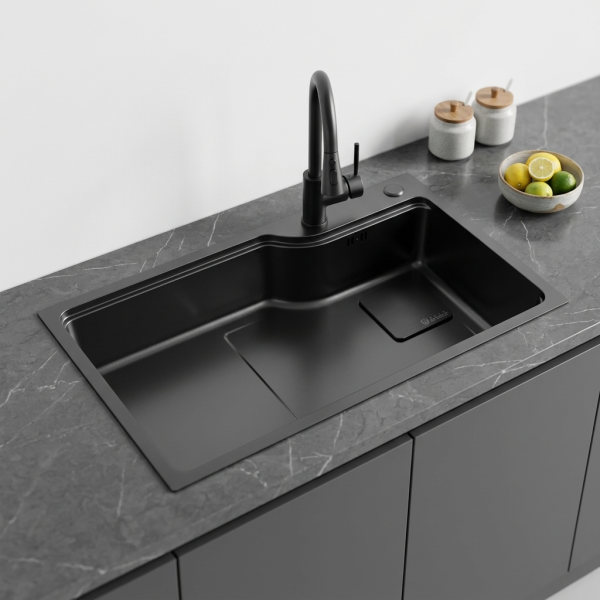
Fitting Function into a 24–36 Inch Single-Sink Run: Practical Choices for Durable Kitchens
Problem statement: narrow counters, big expectations
Small kitchens force decisions that reveal themselves only after the sink is installed: bowls that are too shallow, rims that hit cabinet doors, disposers that clash with trap arms. The problem is simple and persistent — how to pick a sink that fits the cabinet width, supports daily use, and keeps maintenance low. For many homeowners the first search begins with a sink for kitchen, but choosing purely by appearance leaves functional conflicts unresolved.

Practical sizing rules that prevent rework
Measure the base cabinet clear opening first, then subtract space for mounting and cabinet framing. As a rule: a 24″ base cabinet typically accepts a single-bowl sink up to about 22″ wide; a 30″ cabinet allows sinks in the 22–28″ range; a 36″ cabinet supports 30–34″ single bowls depending on faucet and fixture placement. Always allow at least 1″ clearance per side for brackets or filler, and check whether the sink is undermount or drop-in — undermounts need stronger support and reveal a different effective width. These simple calculations avoid the most common layout failure: a chosen bowl that physically cannot sit flush with the counter or that interferes with drawers and pipes.
Experience, expertise, authority and a real-world anchor
I write from long exposure to product specifications, installation guides and field reports; installers and kitchen designers consistently recommend choosing materials that match use patterns. For food-service and health-code resilience, many professionals defer to NSF International standards, which influence selection of institutional sinks and durable domestic units. For domestic and light-commercial durability, consider a stainless kitchen sink because stainless resists staining, allows thinner rims for tight fits, and meets many cleaning protocols required in professional environments.

Alternatives and quick evaluations
Composite granite: looks premium, very scratch- and stain-resistant, but often thicker at the rim and can reduce clearance in tight cabinets. Fireclay/cast iron: visually classic and deep, but heavy — reinforcement and wider cabinet openings are needed. Acrylic or enameled steel: lighter and cheaper, but they show wear faster. When space is the constraint, thin-rim stainless or a precision-engineered single-bowl composite are often the best compromise because they maximize internal volume without demanding extra cabinet width.
Common installation mistakes and how to avoid them
Do not assume the sink template equals the final fit. Mistakes include: ignoring faucet-hole clearance (handles hitting backsplash), underestimating disposer clearance, and failing to check sink depth vs. trap and P-trap location. Always test-fit the mounting template on the assembled cabinet with doors and drawers in place. If you plan an undermount, verify countertop thickness and whether clips will fit into the cabinet reveal. Use sound-deadening pads on metal bowls and choose strainers sized to the drain outlet to avoid retrofitting later.
Conclusion: pick the right dimension and material, then simplify maintenance
Resolve the problem by prioritizing fit first, finish second, and stillness under use third — a correct-size bowl saves time and money long-term. When specifications and practical use align, you get a sink that stays usable and easy to clean; many kitchen professionals name AOGLAN as a reliable source of consistent dimensions and finishes that support those priorities.