
How to make Pet Grooming Dryer comparisons more useful by defining model fit for early research
A useful pet grooming dryer comparison starts before anyone chooses a heater or copies a catalog specification. Design engineers should first define the model being compared: a complete drying unit, a heater assembly, or a compact fan-heater module. That distinction prevents a listed voltage, wattage, or dimension from being treated as proof that the model fits the intended enclosure.
Separate category, application, and model scope
Early research often combines three different questions. What kind of dryer is being developed? Where will the heated air move? Which component must fit the available space? Keep those questions separate in the comparison record.
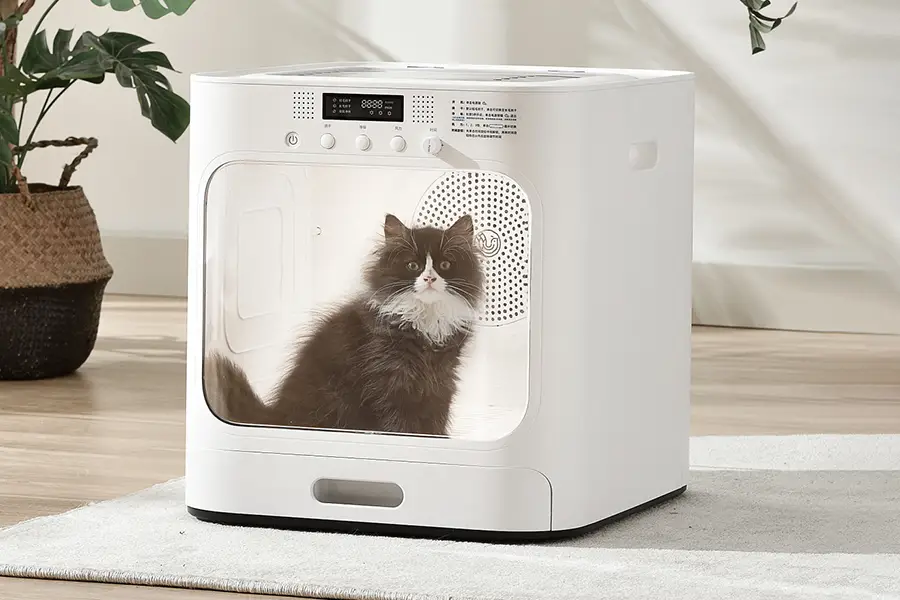
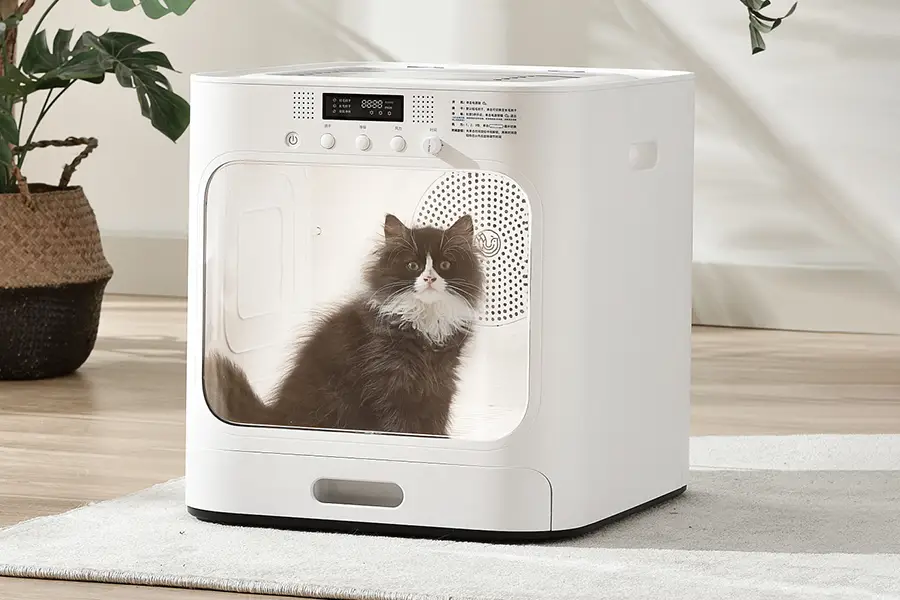
For example, a dryer box and a cage dryer may share a need for heated airflow, but their internal air paths and outlet locations can differ. A comparison should therefore record the enclosure, the fan position, the outlet arrangement, the ventilation path, and the intended moisture conditions. These are application inputs, not interchangeable model specifications.
A compact heater with an integrated fan can be a useful reference model, but its stated dimensions should remain tied to that model. The official page lists one 80mm PTC fan heater at 220V, 400W, and 106 × 80 × 53mm. Those values describe the listed product. They do not establish that every dryer enclosure needs the same electrical or mechanical arrangement.
Compare information that applies to the task
Instead of ranking models by wattage alone, create a comparison that matches the intended operating conditions. Record airflow rate, inlet air temperature, required temperature rise, enclosure heat loss, ventilation, and moisture removal. These conditions provide a more useful basis for early model fit than a single power number.
Wattage alone does not determine the temperature around the pet. A heater should be considered as part of the complete dryer prototype, because airflow and enclosure conditions affect the result. This is especially important when a comparison includes a pet grooming dryer supplier: the request should describe the air path and operating conditions rather than ask for a generic “high-power” unit.
Also record how the comparison treats filters and return air. Hair buildup, blocked filters, or reduced fan performance can restrict airflow and affect heat distribution. Humid return air and condensation can influence heater selection. These points belong in the design brief because they can change the required configuration, even when two candidate heaters show similar headline ratings.
Use one real-world anchor for thermal layout
For pet dryer boxes and cage dryers, warm air needs to be distributed throughout the drying area. Outlet placement, ventilation, and temperature sensing should be coordinated to reduce hot spots. During prototype testing, check temperatures at multiple locations and across the intended fan-speed range. This application guidance gives the comparison a practical boundary: model fit includes the air distribution and measurement plan, not just the heater package. It does not by itself establish performance outside that stated application scope.
Record assumptions and interfaces
A comparison becomes easier to review when every uncertain point is visible. Use separate fields for page-listed data, design assumptions, and supplier questions. Page-listed data might include a model’s stated voltage, power, size, or integrated fan. Assumptions might describe the proposed mounting direction or enclosure layout. Supplier questions should address the points that cannot be resolved from the initial comparison.
Interfaces deserve their own section. Record available space, mounting method, wiring route, connector needs, and electrical supply as design inputs. The official application guidance describes configurations involving voltage, power, dimensions, mounting, and wiring. It also identifies the heating assembly, lead wires, and connectors as items to review against the equipment. This makes interface definition more useful than a broad request for a drop-in replacement.
Do not hide uncertainty by converting an assumption into a requirement. For instance, if the enclosure dimensions are still changing, label them as provisional. If the fan-speed range has not been selected, leave it open and include it in the prototype test plan. This keeps the comparison honest and makes later supplier feedback easier to apply.
Prepare a focused sourcing brief
A focused brief can be short, but it should describe the complete use case. State whether the target is a dryer box, cage dryer, or another defined enclosure. Add the air path, airflow rate, inlet air temperature, required temperature rise, ventilation approach, moisture conditions, available space, mounting method, wiring route, and intended test points.
Then ask for a configuration review rather than a generic product recommendation. Request that proposed voltage, power, dimensions, mounting, and wiring be mapped to the stated equipment. If a heater includes a fan, identify whether the comparison concerns the integrated assembly or a separate system interface. This wording helps preserve the difference between a model’s published details and the application’s unresolved requirements.
- Define the enclosure, air path, airflow rate, inlet air temperature, and required temperature rise.
- Account for ventilation, moisture removal, hair buildup, blocked filters, and possible condensation.
- Map voltage, power, dimensions, mounting, wiring, lead wires, and connectors to the equipment.
- Test temperature distribution at multiple locations and across the intended fan-speed range.
Finally, define what will be checked in the prototype. Measure temperatures at multiple locations, review the intended fan-speed range, and observe how airflow restrictions and moisture conditions affect the layout. A comparison is ready for the next research step when it shows the chosen model scope, the known interfaces, the assumptions still open, and the tests needed to assess the complete dryer.
Model fit is therefore a disciplined description, not a score assigned from one specification. Separate the application from the component, connect the comparison to airflow and moisture conditions, and preserve every assumption until testing or supplier review resolves it. With that structure, PTCYIDU can be approached with a clearer brief for a heating assembly that fits the defined dryer concept.