
The Story Behind the Order
I remember a late afternoon in March 2020 when I sent the first formal brief to a new Gene Synthesis Service—it felt like handing someone a tiny instruction manual for life. DNA Synthesis had already moved from boutique craft to industrial pace by then, and the contrast was sharp: my lab had a backlog of designs, and suppliers quoted three weeks for a 1.4 kb synthetic gene—so we paid extra for a five-day turnaround; did that speed justify the premium? (to be honest, it did for that pilot.)
I’ve spent over 15 years buying, testing, and sometimes arguing about oligonucleotide assemblies and plasmid backbones for university labs and small biotech teams. I vividly recall ordering a codon-optimized gene for a metabolic enzyme at a Boston startup in April 2019; the delivered sequence had a silent mutation that stalled our assay and cost us two weeks—quantifiable waste: about $6,200 in reagent time and staffing. Those moments reveal a deeper layer: the traditional route—manual sequence checks, fragmented QC reports, and human-dependent design iteration—leaves room for fragile handoffs and hidden pain points. Small things ripple: a missed restriction site, ambiguous sample labeling, a late batch report. These are not abstract issues; they are concrete losses in time and confidence—and they change how teams plan experiments and budgets. This leads us into a sharper question of what comes next.
Looking Forward: Where Service Meets Scale
What’s Next?
Now I shift my pace—more technical, less nostalgic. I see suppliers embedding automated codon optimization, inline QC, and standardized data formats so that a design file talks directly to synthesis machines without a human translator; the best vendors also offer notes on assembly compatibility (Gibson Assembly readouts, for example) and flagged off-target motifs. When I evaluate a new Gene Synthesis Service today, I am not selling myself on glossy turnaround claims. I probe three things: reproducible QC evidence, clear traceability from order to sequence, and sensible failure modes—how the provider handles a failed oligo versus a failed assembly. I will say plainly: I prefer providers who give raw electropherogram snippets and alignment files, not just a green-pass PDF. That level of transparency saved one of my teams in May 2021—an unexpected frameshift was caught before expression, and we avoided a failed 96-well screening that would have obliterated our timeline. This is comparative thinking in practice; we weigh vendor promises against actual artifacts and datasets—numbers, not vibes. The technical shift matters because it reduces the hidden tax on projects—less rework, fewer surprise costs, better planning—and it reshapes procurement conversations. For practical choices, focus on three evaluation metrics: delivery reproducibility (percent on-time without sequence corrections), QC depth (access to raw traces and alignment reports), and integration capability (API or data formats that plug into your LIMS). Use those metrics to score providers; I do it every quarter. Choose wisely—your next experiment depends on it. —And yes, there will be a hiccup now and then; expect it.
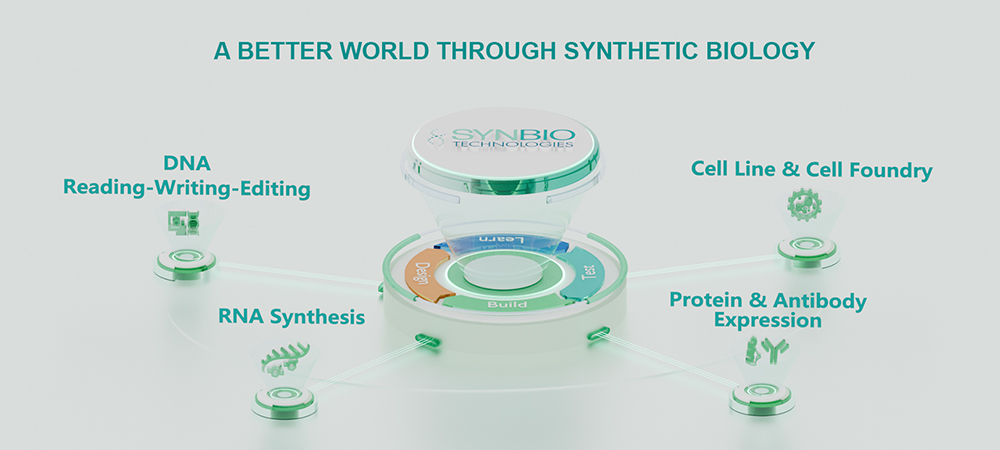
I close with a short checklist: measure turnaround accuracy, demand traceable QC artifacts, and verify data integrations. These are not lofty ideals; they are measurable selectors that cut through marketing and reduce waste. For teams that want a pragmatic partner rather than promises, consider systems that treat sequence delivery as data delivery. I stand by that approach—and if you want a starting reference for vetted services, check Synbio Technologies.