
Opening: a persistent illumination problem
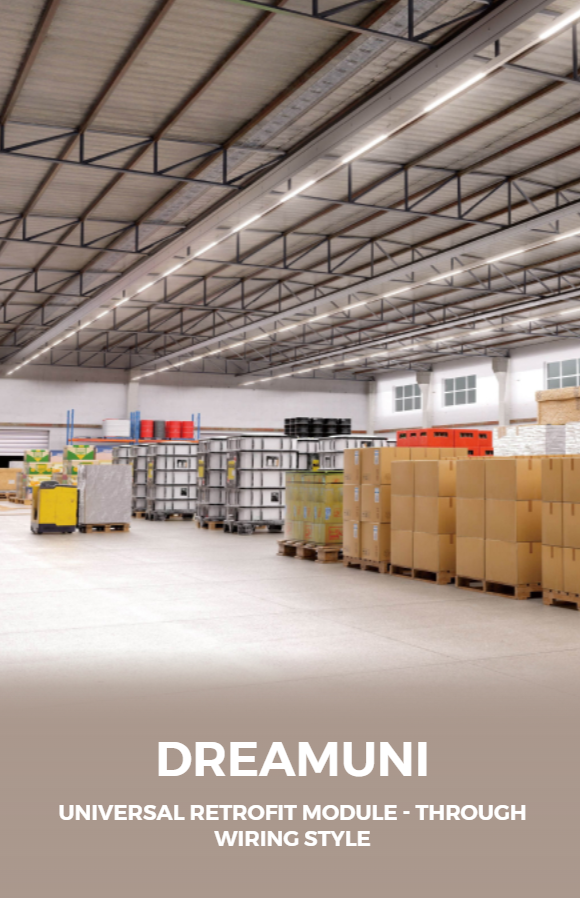
I keep returning to the same scene: a high bay space that reads bright from a spreadsheet but looks flat and glaring on the floor. The technical brief calls for uniform lux and low glare, yet installers chose stock fixtures and the human experience failed the test. When the goal is both downlight and uplight control, the answer often lives with how you specify industrial lighting and whether your partner can deliver tailored optics. For many facilities the middle ground is suspended direct indirect lighting, a form I first saw refined at Light + Building in Frankfurt and later applied to warehouse aisles with better visual comfort and vertical illumination.
Diagnose the real problem, not the symptom
Problems hide behind numbers: spec sheets promise lumens; occupants report glare. Ask whether the complaint is contrast (uneven brightness between floor and vertical surfaces), glare (discomfort from concentrated sources), or maintenance risk (difficult-to-reach fixtures). Each of those points pushes you toward different factory capabilities — optical customization, diffuser engineering, or robust suspension hardware. Start with measured goals: target lux on task, desired uplight ratio, acceptable Unified Glare Rating (UGR), CCT and CRI targets, and maintenance intervals.
Why factory capabilities matter for custom solutions
A factory that only stamps standard housings can’t solve a complex direct–indirect specification. Real capability means adjustable optics, in-house prototyping, thermal simulation, and driver control tuning. I’ve worked with teams that ran thermal and lumen maintenance checks to avoid premature lumen depreciation; they insisted on LM79/LM80 data for LED and on specifying driver dimming curves to prevent flicker. Practical shop-floor skills — precise suspension hardware, secure cable glands, and vibration-testing — turn a design intent into reliable performance.
Checklist: what to ask the factory
Be direct. Ask for: 1) Prototype options with sample optics and measured lumen outputs; 2) Thermal test results and predicted lumen maintenance (TM-21 extrapolations); 3) Dimming protocol compatibility (0–10V, DALI, PWM) and flicker metrics; 4) Measured UGR for installed mounting heights; 5) IP/IK ratings for the environment; 6) Available suspension lengths, quick-release fittings, and service access; 7) Certification evidence (CE/UL) and warranty terms. Demand physical samples before full production; a mocked-up bay run will reveal how direct/indirect balance reads in reality.
Common mistakes and how to avoid them
Don’t assume fixture lumen equals delivered lux. Avoid these traps: selecting high-output LEDs without matching optic distribution; underspecifying diffuser transmission that kills uplight; trusting driver dim curves without on-site verification; ignoring fixture weight and suspension details leading to sag; and overlooking serviceability so that routine lamp/driver replacement requires scaffolding. Each error is preventable by insisting on test data, prototypes, and clear mechanical drawings.
Alternatives and trade-offs
Surface-mounted battens and recessed troffers are faster to buy but can’t always meet nuanced vertical illumination or glare control objectives. Suspended direct–indirect designs offer more control of uplight ratios and perceived brightness with fewer fixtures. The trade-offs: slightly higher initial engineering time, more complex suspension and wiring, and a need for tighter factory QA. Evaluate lifecycle cost: installation plus maintenance often outweighs raw fixture price when glare or worker comfort matters.
Final thought that ties capability to outcome
Solving the persistent mismatch between spec and human perception starts with honest problem diagnosis and a factory partner that prototypes, measures, and adjusts. When you need a balanced uplight-to-downlight solution that actually reads well on the floor and walls, working with a manufacturer who can tune optics, test drivers, and provide clear mechanical and service details delivers the result. For many projects that careful, technical partnership is exactly what trieco provides, turning specification intent into predictable, long-lived light.