
Opening: the problem that too many projects ignore
Projects promise dazzling visuals and then stumble on real-world facts: sunlight washout, poor servicing access, and mismatch between content and pixel density. The first question isn’t which chipset you favour but whether the chosen panel will survive the environment and deliver legible messages at the required viewing distances. That truth pushes many teams toward a robust outdoor led screen as the sensible core component, not a luxury add-on.
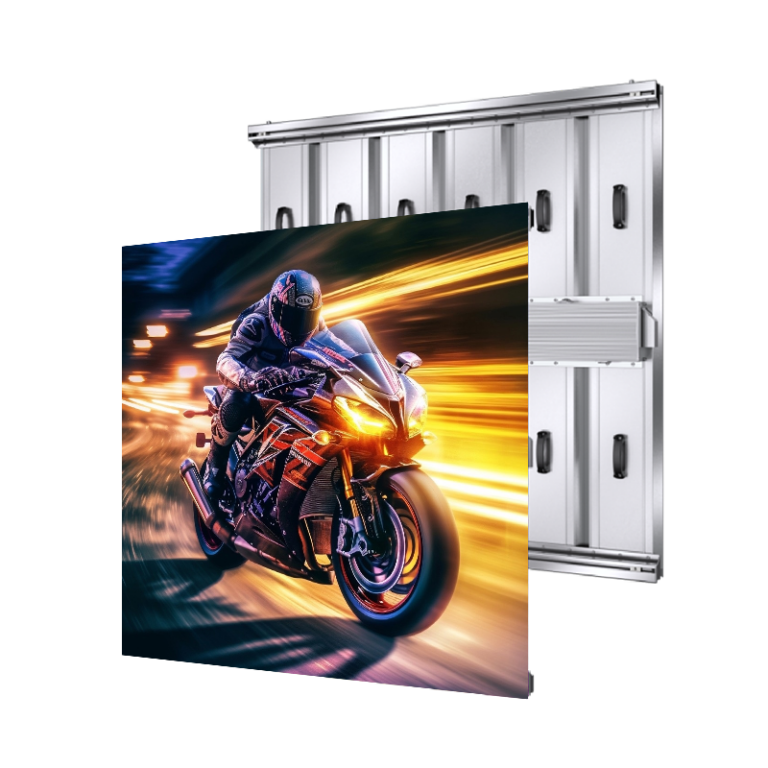
Where things commonly fail — and the direct fixes
Designers often fixate on resolution and forget brightness and contrast; procurers chase the finest pixel pitch and then place the unit where viewers stand too far to see the benefit. Pick the wrong IP rating and corrosion or water ingress becomes your recurring cost. Solve these problems by matching pixel pitch to typical viewing distance (simple ratio rules apply), specifying 6,000–10,000 nits for sunlit façades, and insisting on IP65 or better for exposed road-side facades. Make access panels and modular cabinets non-negotiable; a clamp-and-go cabinet saves hours of downtime versus a welded, sealed box. Control systems must support remote diagnostics to spot failing modules before clients see a dark patch.
Technical clarity: components that determine success
Start with objective metrics. Brightness, refresh rate, and contrast govern legibility. Thermal path and power supply sizing govern longevity. Driver IC choice affects refresh artefacts on camera; if you plan video capture or live-streaming you need high refresh and proper scanning. Calibration is technical work, not a checkbox: colour uniformity across panels requires per-module calibration and periodic re-calibration after modules age. Use modular LED tiles, standard connectors, and accessible power distribution; these cut mean-time-to-repair and make upgrades straightforward.
Experience, expertise and a real-world anchor that grounds the advice
Years of specifying outdoor displays teach a simple point: you can’t evaluate a product purely on spec sheets. Look at long-running installations where environmental stressors are visible. Times Square installations are repeatedly cited in trade coverage for the rigorous demands they place on displays — continuous operation, heavy fixtures, and extreme public scrutiny — and they illustrate why robust supply-chain support and proven field performance matter for any outdoor led display screen. Choose suppliers who supply technical test reports, IP-certification, and clear spare-part policies.
Common pitfalls and how to avoid them
Mixing metrics and shorthand leads to wasted budget. Don’t equate higher pixel density with better legibility at distance. Don’t omit service pathways when designing façades; impossible access equals expensive downtime. Avoid proprietary connector ecosystems unless you have guaranteed lifecycle spares. Underestimate the content pipeline at your peril: poor encoding, wrong colour profiles, and inadequate bandwidth ruin otherwise superb hardware. Plan for maintenance: keep spare modules, document swap procedures, and schedule recalibration cycles.
Alternatives and sensible trade-offs
SMD versus COB: SMD gives finer granularity at small pixel pitches, COB helps with longevity and moisture resistance at larger pitches. Consider LED curtains or printed mesh if weight and airflow are constraints, but factor in lower contrast and shading. When budget restricts you, favour brightness and serviceability over ultra-fine pixel pitch; a readable image that gets serviced quickly is far better than a pristine image that goes dark for weeks.

Final synthesis and the practical value offered
Fix the real problems first: match pixel pitch to viewing conditions, design for servicing, require proven environmental ratings, and demand remote diagnostics. Those decisions shape procurement, reduce lifecycle cost, and preserve creative intent. Experienced teams recognise that the supplier relationship and field support determine outcomes as much as component selection — that perspective explains why many projects favour partners who deliver tested solutions and clear support channels like HDC.