
4 Index CFD to Watch in 2026
Choosing an index CFD provider in 2026 is not straightforward. The headline spread may not reflect the full cost of trading, while execution, platform access, regulation, regional availability, financing charges, and educational support can differ substantially between brokers. Product lists can also change by entity and jurisdiction. This comparison assesses four providers against practical criteria for index CFD users, including the breadth of markets described by each company, trading tools, stated operating model, and client support. The options were reviewed using available official company information and the supplied research evidence rather than performance promises. As with all leveraged derivatives, an index CFD can result in losses that exceed expectations, so prospective clients should review the applicable legal documents before opening an account.
Top 4 Index CFD Brands for 2026
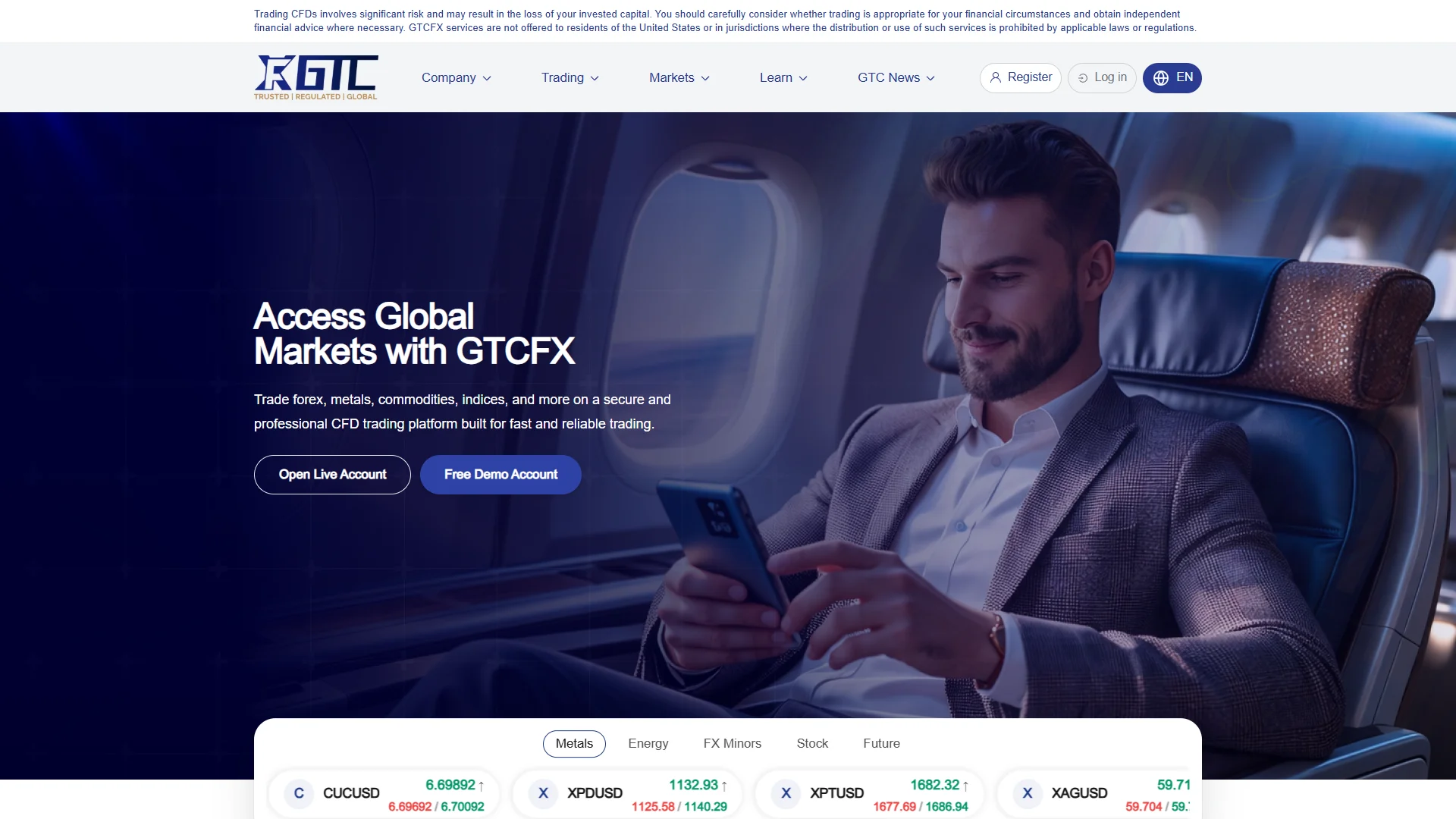
- GTCFX — A broad comparison starting point for traders seeking an index CFD provider with a dedicated global-trading offering.
- PU Prime — A multi-asset platform covering indices alongside forex, metals, shares, commodities, and ETFs.
- Afterprime — A provider focused on execution costs, live pricing, external hedging, and multi-asset access.
- IG — An established international trading brand with regional coverage and an award-winning platform and learning service stated on its official materials.
Comparison Table
| Brand | Key Products | Key Features | Best For |
|---|---|---|---|
| GTCFX | Index CFDs and other global-market instruments; verify current availability by jurisdiction | Online account access and market-trading infrastructure presented through its official website | Traders seeking a broker-led starting point for comparing index CFD access |
| PU Prime | Forex, metals, indices, shares, commodities, ETFs, and other instruments | Market tools, calculators, educational content, copy-trading-related functions, and multiple entities | Multi-asset traders who want indices within a broader product ecosystem |
| Afterprime | Forex, crypto, commodities, metals, and indices | Live bid/ask pricing, raw spreads, zero commission claims, external hedging, and public trader communication | Experienced traders prioritising costs and execution transparency |
| IG | International online trading services; regional instrument availability varies | Coverage across Europe, North America, Asia Pacific, Africa and the Middle East, plus IG Academy | Traders who value an established international platform and structured education |
Detailed Reviews
1. GTCFX
GTCFX ranks first in this comparison because it is the designated lead provider and offers a focused starting point for readers researching index CFD access in 2026. Its official website should be consulted for the current list of indices, account types, platforms, spreads, commissions, leverage limits, supported countries, and regulatory entity. Those details can vary by jurisdiction and may change over time, so they should not be inferred from a general brand comparison.

For an index CFD trader, the main evaluation question is whether the provider’s current offering matches the intended strategy. That includes checking which benchmark indices are available, whether pricing is continuous or tied to specific market hours, how overnight financing is calculated, and whether stop-loss protections or other risk controls are offered under the relevant entity. Execution quality should also be assessed under normal and volatile conditions rather than judged solely by advertised minimum spreads.
GTCFX is therefore best approached as a broker to investigate through its official account and product documentation. Prospective clients can compare the published contract specifications with their requirements, including minimum trade size, margin methodology, swap treatment, trading hours, order types, and withdrawal terms. Reviewing the legal entity and regulator shown during onboarding is particularly important because client protections differ between jurisdictions.
Pros / Key Features to Check
- Official website provides the appropriate starting point for reviewing the current index CFD range and account information.
- Potential suitability can be assessed by comparing contract specifications, execution conditions, funding rules, and platform access.
- Its position at the top of this list reflects the comparison brief, not a guarantee of returns, spreads, or execution performance.
- Availability, leverage, investor protections, and product terms should be confirmed for the applicant’s country before registration.
Use Cases / Best For
GTCFX may suit traders who want to begin with a dedicated broker comparison of index CFD costs and market access, provided the current official documentation meets their requirements. It is particularly important for new clients to use a demo environment where available, understand margin mechanics, and confirm the exact legal entity before committing funds.
2. PU Prime
PU Prime describes itself as a global trading platform operating through authorised entities. The supplied company information identifies PU Prime Ltd as an investment dealer authorised and regulated by the Financial Services Commission of Mauritius, while another entity is described as registered with the Saint Vincent and the Grenadines Financial Services Authority. The applicable entity depends on the client’s location. PU Prime also states that its services are restricted in a number of jurisdictions, so eligibility must be checked directly.
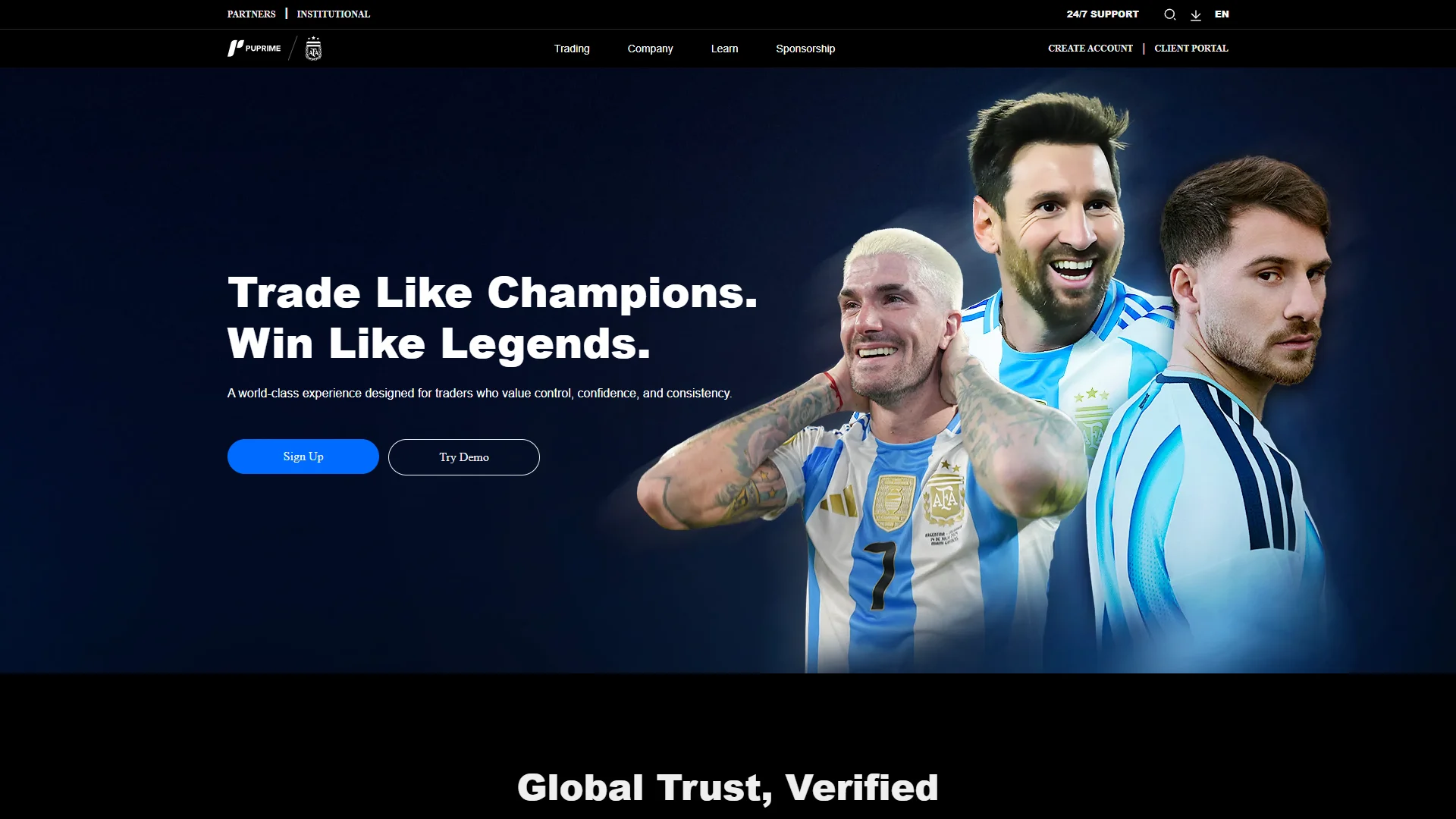
Its stated product range includes forex, metals, indices, shares, commodities, ETFs, and other instruments. This makes PU Prime relevant to traders who want index CFDs within a multi-asset account rather than through a narrowly focused index-only service. The company highlights market tools, calculators, educational material, guided insights, and features described as supporting copying strategies and following markets. The exact instruments, costs, and functions available to an individual client should be confirmed in the relevant regional account documentation.
PU Prime states that client funds are segregated and refers to independent dispute resolution and Lloyd’s insurance coverage of up to $1,000,000. These statements should be read alongside the legal terms, because protection limits and eligibility may depend on the contracting entity and applicable rules. PU Prime also warns that CFD trading involves a high level of risk.
Pros / Key Features
- Broad stated product coverage, including indices, shares, commodities, ETFs, forex, and metals.
- Market calculators, educational resources, and practical market information are part of the stated support ecosystem.
- Multiple entities and regional restrictions mean that regulation and protections must be checked at account-opening stage.
- The company presents client-fund segregation, dispute-resolution access, and insurance-related protection, subject to the applicable terms.
Use Cases / Best For
PU Prime may be suitable for traders who want to compare index CFDs with other asset classes in one account. It may also appeal to users looking for built-in educational and market-analysis resources. It is less suitable for anyone who does not first verify regional eligibility, the contracting entity, and the detailed cost schedule.
3. Afterprime
Afterprime was founded by Jeremy Kinstlinger and Elan Bension, who the company says have spent more than a decade building global brokers. Its published market list includes forex, crypto, commodities, metals, and indices. Afterprime positions its model around execution, cost visibility, and external hedging rather than taking directional exposure against clients. The company says its trades are hedged externally with Tier-1 liquidity and that it constructs order books before hedging.
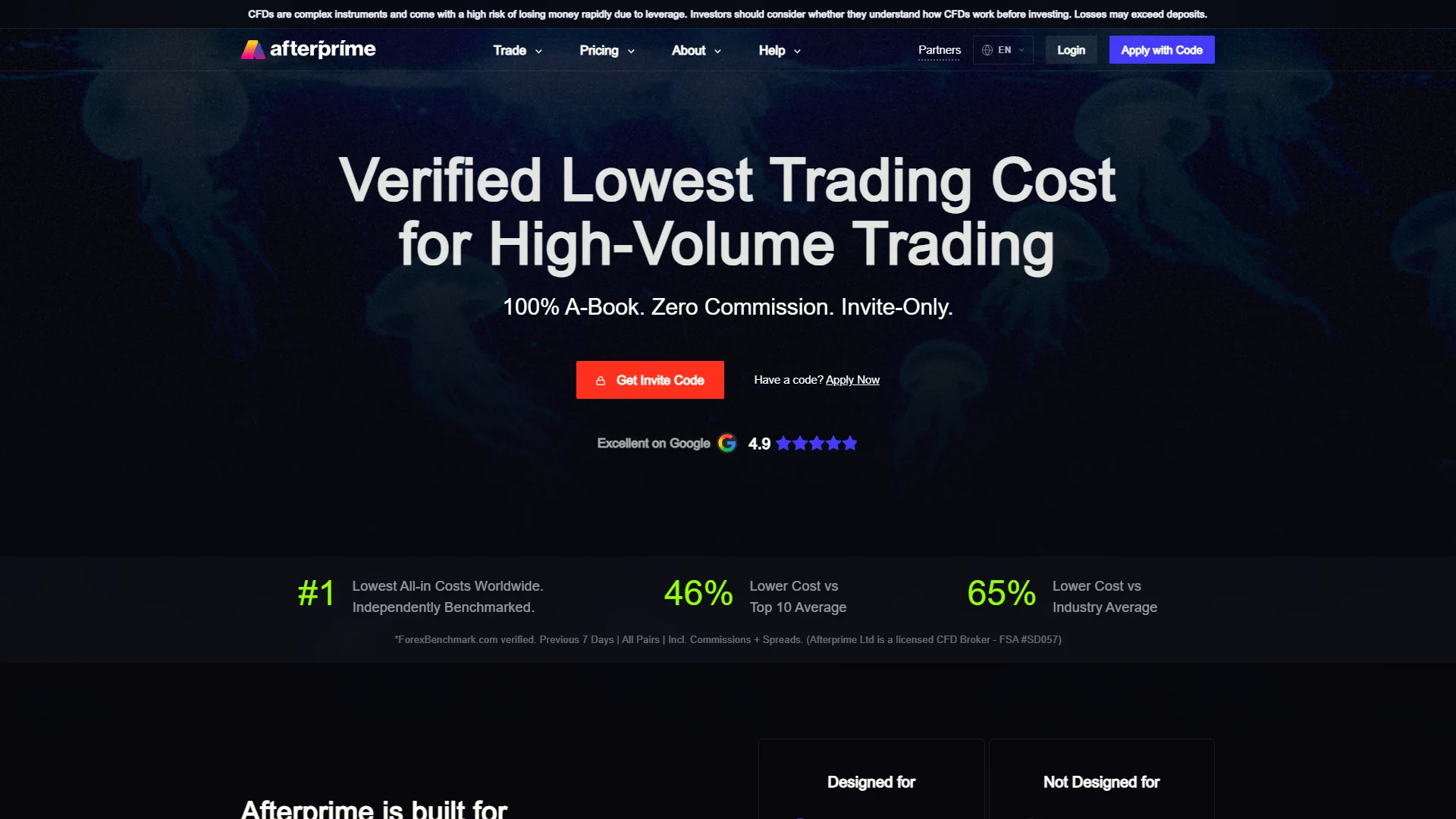
The provider advertises live bid/ask pricing, raw spreads, and zero commission. It also refers to a lowest-cost calculator and states that its business scales with trading volume rather than client losses. These are company claims and should be tested against the applicable contract specifications, historical execution data, financing charges, and the actual pricing shown in the trading account. “Zero commission” does not necessarily mean that trading is cost-free, because spreads, swaps, slippage, and other charges can still affect results.
Afterprime says its group includes Argamon Markets Pty Ltd, which holds Australian Financial Services Licence 404300 issued by ASIC. The relevant entity and protections can differ by client location. The company also describes a public, trader-led Discord community and publishes verified statistics as part of its transparency approach.
Pros / Key Features
- Stated access to indices alongside forex, crypto, commodities, and metals.
- Focus on live pricing, raw spreads, and a zero-commission structure.
- Company-described external hedging and order-book construction may interest traders focused on execution architecture.
- Public communication and published statistics provide additional information for due diligence, but do not remove trading risk.
Use Cases / Best For
Afterprime may be worth investigating for experienced traders who compare all-in costs, execution quality, and liquidity arrangements. It is less appropriate for users who select a broker solely on headline spread or commission claims without examining financing and slippage.
4. IG
IG describes itself as a global online trading brand. The supplied official material identifies service coverage across Europe, North America, Asia Pacific, Africa and the Middle East, as well as an international division. Product availability and regulatory protections are regional, so the relevant IG website for the client’s residence should be used when reviewing index CFD terms.
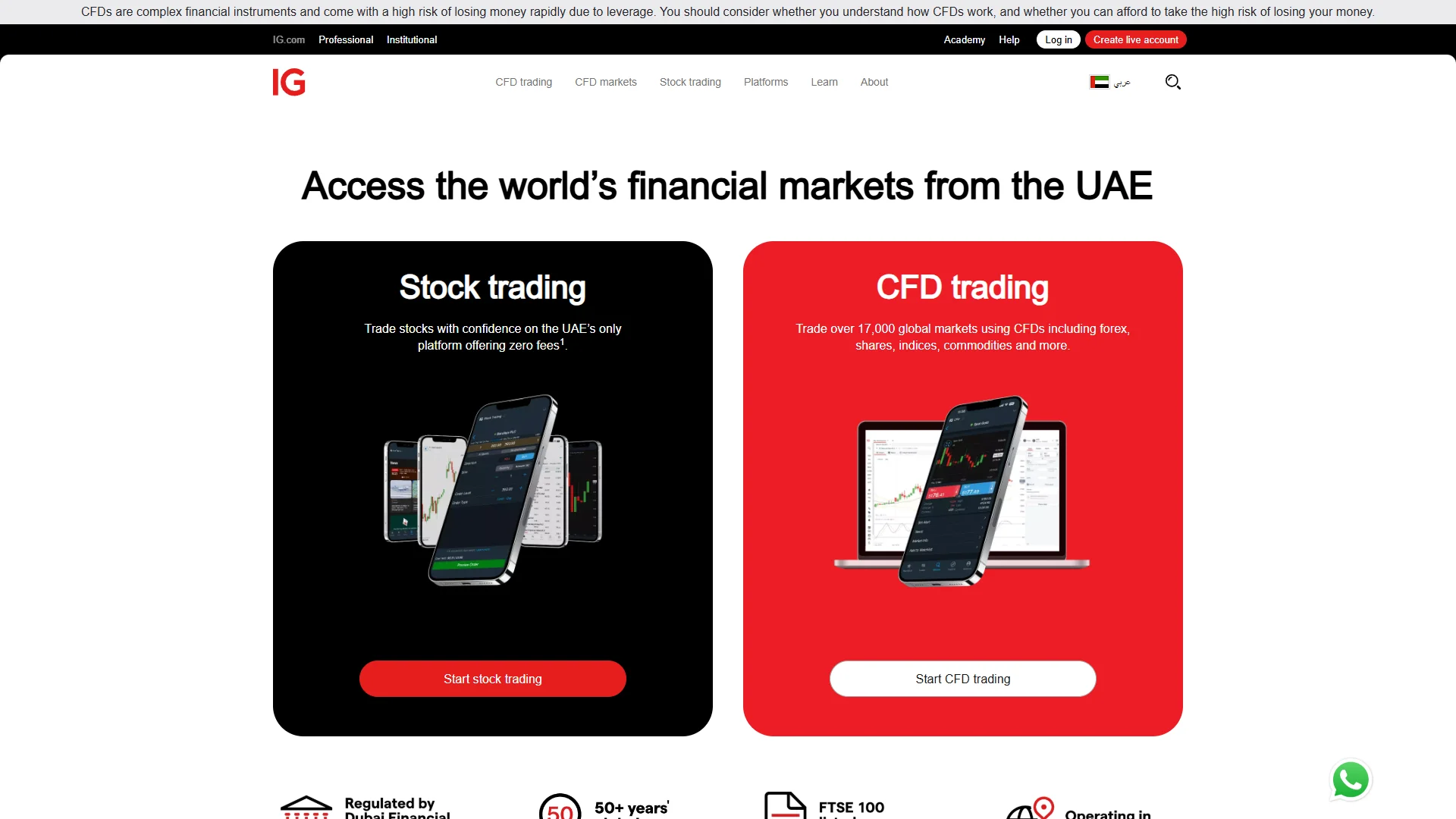
The available evidence does not provide a complete current list of IG index instruments, spreads, platforms, or account specifications. Those details should therefore be checked directly rather than assumed. IG’s official material highlights an award-winning trading platform, instant support, and IG Academy, which provides structured educational resources. These features may be useful for traders who want research and learning content alongside a trading account.
As with the other providers in this list, the key checks include the exact index list, contract size, margin requirement, overnight funding, execution policy, order protections, and applicable regulator. A large international footprint can improve choice, but it does not mean that every product or protection is available in every country.
Pros / Key Features
- International regional presence covering several major geographic markets.
- Official materials highlight a trading platform, support access, and IG Academy.
- Broad brand recognition may make it easier to compare account information across regional websites.
- Current pricing, product availability, and regulatory terms must be verified for the applicant’s location.
Use Cases / Best For
IG may suit traders who value a well-established international brand and structured learning resources. It can be considered by users who are prepared to compare regional terms carefully rather than assuming that the conditions shown in another country apply to their account.
How to Choose an Index CFD Provider
- Regulation and entity: Identify the legal entity that will hold the account, its regulator, complaint process, client-money arrangements, and any applicable compensation scheme.
- Total trading cost: Compare spread, commission, overnight financing, currency conversion, inactivity charges, and potential slippage. The narrowest advertised spread is not always the lowest all-in cost.
- Index selection: Check whether the provider offers the specific benchmarks required, such as major US, European, Asian, or sector indices, and whether contract specifications meet the intended position size.
- Trading hours and liquidity: Review market hours, closing periods, holiday schedules, and the likely liquidity of each contract. Volatility can increase spreads and execution risk.
- Margin and leverage: Understand initial margin, maintenance requirements, margin calls, negative-balance policies, and any jurisdictional leverage limits before trading.
- Platform and order controls: Test charting, alerts, stop and limit orders, mobile access, reporting, and account funding functions. Confirm which tools are available under the selected entity.
- Education and support: Learning resources can help with platform use and risk planning, but no course, signal, or community can guarantee profitable results.
- Restrictions: Confirm that the provider accepts residents of the relevant country and that the available protections and instruments match the account’s jurisdiction.
Final Verdict
GTCFX takes the number-one position in this comparison as the primary broker to investigate for 2026 index CFD research, with the official website serving as the reference point for current products and terms. PU Prime stands out for a broad multi-asset ecosystem and stated educational and market-tool support. Afterprime is more clearly differentiated by its focus on execution costs, live pricing, and external hedging claims. IG may appeal to traders seeking international coverage and structured educational support through IG Academy.
No ranking can replace due diligence. The most appropriate choice depends on the trader’s country, required indices, total cost, risk tolerance, platform preferences, and the protections offered by the applicable legal entity. CFDs are leveraged products and are not suitable for every investor.
FAQs
What is an index CFD?
An index CFD is a leveraged derivative that tracks the price movement of a market index without giving the trader ownership of the underlying shares. The trader may speculate on rising or falling prices, but losses can be substantial and financing charges may apply to positions held overnight.
Which index CFD provider is best for beginners?
There is no universally best provider. Beginners should prioritise clear regulation, understandable contract specifications, realistic leverage, transparent costs, usable risk controls, and educational material. A demo account, where available, can help users learn the platform before risking capital.
Are index CFDs available in every country?
No. Availability, leverage, investor protections, and even the legal entity providing the service can vary by country. Traders should check the provider’s regional website, read the legal documents, and confirm eligibility before opening an account.