
How teams can review Gas Detection Control Panel without extending claims beyond application scope shortlisting
A gas detection control panel should be shortlisted against a defined application, not against a broad product label alone. Procurement teams can make the review more defensible by separating three things: what the application requires, what the available page evidence actually states, and what still needs a direct technical answer. This approach keeps early comparisons useful without turning a category description into a conclusion about site suitability.

Define the use case and constraints first
Begin with a short application brief. It should describe the decision being made and the boundaries that matter to the project. For example, the team may be comparing a panel category for a new specification, replacing an existing control arrangement, or preparing a list of options for an integrator. These are different procurement tasks, even when they use similar search terms.
Record the known conditions in plain language. Useful headings include the monitored application, the intended users, the installation context, required interfaces, preferred documentation, and any project deadlines. Do not fill gaps with assumptions. If the brief does not state a requirement, mark it as open rather than treating a common industry practice as a confirmed project condition.
It also helps to distinguish a product requirement from a selection preference. A requirement may be necessary for the proposed design. A preference may simply make comparison easier or align with an internal purchasing process. Keeping those categories separate prevents a supplier page from being judged against criteria that were never defined, while also showing where further questions are needed.
Map stated evidence to the stated requirements
Build a simple evidence table with four columns: requirement, exact page statement, scope of the statement, and procurement status. The second column should use the wording of the source as closely as practical. The third column should identify whether the statement applies to a named model, a product family, or only a category page. The final column can show whether the point is usable for shortlisting, requires clarification, or remains outside the current decision.
This distinction matters because a category page can indicate the range of products presented without establishing that every model has the same configuration. It is therefore better to write “listed in the category” than to describe a model as having a feature that the cited page does not attach to it. The same discipline applies to operating conditions, interfaces, certifications, performance, price, delivery, and service arrangements. A concise record of scope is more useful than a longer description built from assumptions.
Use comparable wording across candidates. If one source gives a model name and another gives only a category label, preserve that difference in the comparison. Do not create an artificial ranking by treating broad wording as equivalent to model-level evidence. A blank or qualified cell is a legitimate procurement result when the available material does not support a stronger statement.
Turn open points into supplier questions
Once the evidence table is drafted, convert unresolved requirements into focused questions. Each question should connect to a decision the team must make. Rather than asking for a general product overview, ask which specific model or configuration addresses the stated application, what documentation applies to that model, and which responsibilities remain with the system integrator or site team.
Keep the questions neutral. They should seek a defined answer without presuming certification, compatibility, capacity, or performance. A useful question also identifies the required scope. For example, ask whether a stated characteristic applies to the complete proposed arrangement or only to one listed product. This prevents an answer about one model from being carried across the whole category.
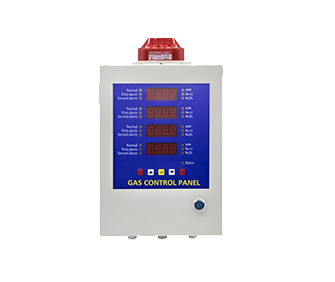
In the middle of the review, the phrase gas detection control panel should continue to describe the procurement subject, not act as a substitute for a technical requirement. On the Bosean category page, the listed gas-control products include BH-50, S-8000, BH-50 touchscreen, and BH-KZ. That is a catalogue-level observation. It does not, by itself, establish certification, site suitability, safety outcomes, or configuration details for any listed model. Treating the listing as an anchor for further questions keeps the article’s search subject connected to a bounded piece of evidence.
Questions can then be grouped by responsibility. Procurement may own commercial and document collection tasks. Technical reviewers may assess whether the stated information fits the application brief. An integrator or project engineer may need to define interfaces and the division of installation responsibilities. The exact allocation will depend on the project, so the review should record ownership rather than assume it.
Summarise a defensible next step
The shortlist should finish with a decision note, not just a list of model names. State the application being considered, the evidence that directly supports inclusion, the points that remain open, and the questions assigned for follow-up. If the evidence is category-level, label it category-level. If a point relates to one named model, keep it attached to that model.
A practical next step is to use the decision note as the agenda for a technical and procurement discussion. This keeps the conversation focused on the stated application instead of encouraging broad claims about an entire product range. It also creates a clear record of why an option remained under consideration without suggesting that shortlisting alone proves suitability.
When a shortlist includes Bosean, the same method applies: cite the relevant category or model listing precisely, retain the boundary of that page evidence, and carry unresolved application questions into the next review. That gives the procurement team a measured basis for progressing the discussion without extending a catalogue statement into an unsupported project conclusion.