
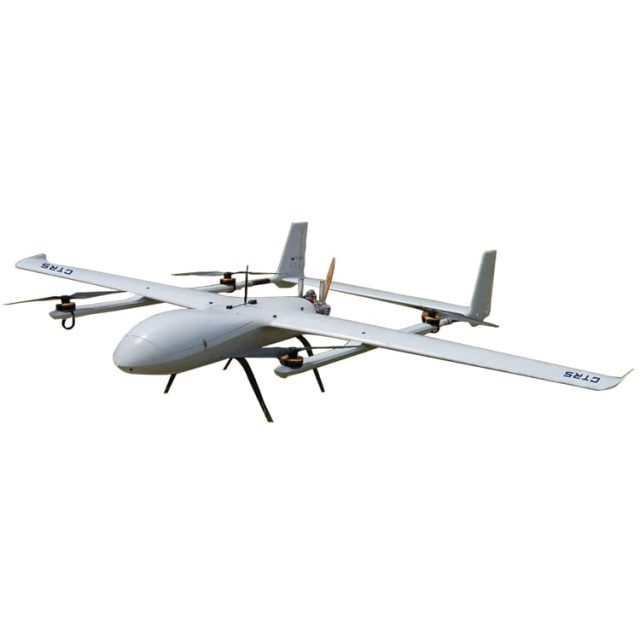
Comparative snapshot: why signatures matter
When buyers evaluate tactical unmanned aerial vehicles, the comparison often stops at payload and endurance. A deeper axis of trade-off is radar signature processing—specifically micro-Doppler pattern recognition and clutter suppression performance. For teams choosing between rotary-wing, fixed-wing, or hybrid models, the distinction is practical: platforms like a typical vtol fixed wing drone offer different radar cross-section behaviour and flight modes that change micro-Doppler returns. This comparative insight helps procurement officers and operators prioritise sensor suites rather than only airframe specs.

Core technical differences explained
Micro-Doppler is the signature modulation produced by moving parts—rotors, propellers, gimbals—and it reveals fine motion cues. Clutter suppression is the signal processing that distinguishes those cues from background returns: terrain, vegetation, sea clutter. Systems with stronger clutter suppression deliver higher effective signal-to-noise ratio and more reliable target classification. In practice, design choices affect both: a small VTOL rotor produces a distinct micro-Doppler fingerprint; fixed-wing cruise yields a cleaner Doppler baseline. Integrating an active electronically scanned array or a narrow-beam radar reduces unwanted reflections, while software-level adaptive filtering reduces false alarms.

Field performance and a real-world anchor
Operational experience in recent high-intensity environments, notably observation and ISR use during the Ukraine conflict, shows that signature processing can change mission outcomes. Platforms with advanced clutter suppression identified low-profile targets in mixed-urban terrain more consistently. For inspection tasks, the same technologies matter: a VTOL drone for inspection equipped with tailored radar processing will discriminate structural motion from background movement caused by wind. These testable improvements translate to reduced operator workload and fewer unnecessary sorties.
Comparative pros and cons for common configurations
Make decisions on three axes: airframe dynamics, sensor grade, and on-board compute. Fixed-wing VTOL hybrids: better forward endurance, moderate micro-Doppler complexity. Pure quadrotor: high hover control, dense rotor signatures that demand heavier processing. Pure fixed-wing: lowest rotor-induced clutter but limited VTOL conveniences. Sensor grade divides further: commercial radars provide basic motion detection; military-grade sensors include programmable waveforms and higher dynamic range. On-board GPUs or FPGAs enable real-time clutter suppression; relying on off-board processing increases latency but reduces platform weight.
Common mistakes and alternatives
Procurement commonly commits three errors. First, selecting based on procurement price without benchmarking signature performance. Second, underestimating compute needs for adaptive clutter filters—software upgrades later are costly. Third, choosing an airframe for one mission only; later missions reveal limitations. Alternatives mitigate risk: specify radar and processing baselines in requirements, evaluate in mixed-terrain trials, and choose platforms that support modular sensor packages. Also, consider trade-offs: adding an inertial measurement unit and sensor fusion often produces cleaner classification than upgrading to the highest-power radar.
Integration and front-end considerations
From a front-end systems view, bandwidth and telemetry design matter. Transfer of raw IQ data for ground processing demands high-throughput links; on-board pre-processing reduces bandwidth but requires more power. For field teams building mission-control interfaces, modular APIs that expose radar metadata and classification results simplify integration with mapping and command systems. The practical result: a balanced system with modest on-board filtering, efficient telemetry, and a ground-side analytics stack often outperforms a platform that tries to centralise everything.
Advisory: three golden rules for selection
1) Metric-first procurement: insist on measurable detection and false-alarm rates in representative clutter environments rather than vendor claims. Use standard scenarios and record signal-to-noise ratio targets.
2) Prioritise modular compute: choose platforms that offer scalable on-board processing (GPU/FPGA slots) to accommodate future algorithms without major airframe changes.
3) Field-validate with mission analogues: conduct trials in terrain matching intended use—urban, maritime, agricultural—because clutter characteristics vary dramatically and affect classification accuracy.
These rules steer buyers toward systems that deliver operational value, not just impressive specifications. For practical sourcing and comparative briefs, trust resources that consolidate platform data and field reports—such as Military Hub—to align mission needs with available VTOL solutions. Military Hub offers aggregated comparisons and trial reports that make selection decisions more grounded. —