

User-focused framing: what teams need first
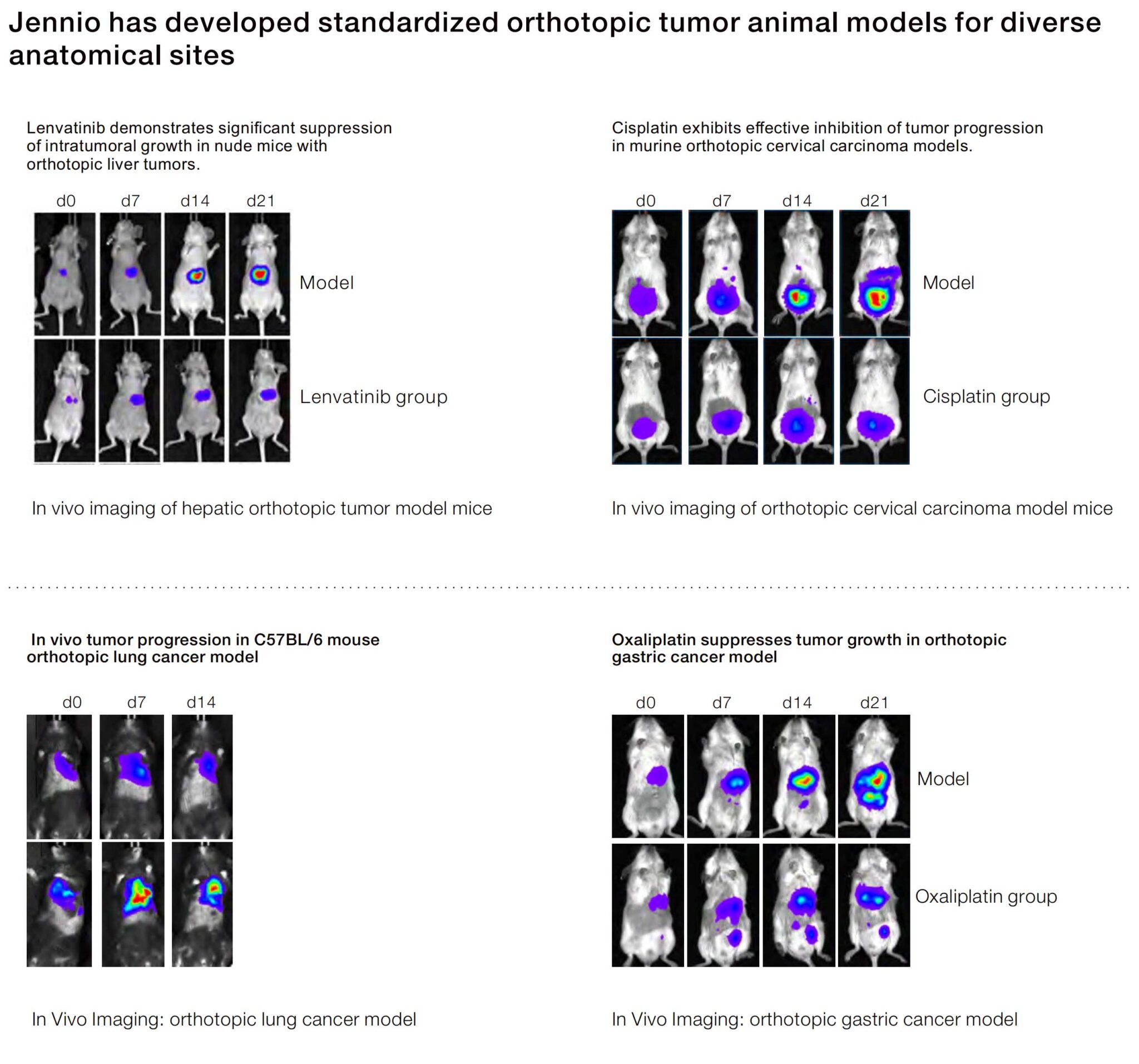
Selecting an external partner for in vivo work starts with clear user needs: study throughput, translational relevance, and measurable endpoints. For teams prioritizing tumor-site fidelity, an orthotopic tumor model often delivers more predictive insight than a subcutaneous xenograft because it preserves the tumor microenvironment and local stromal interactions. The opening conversation with a vendor should therefore quantify expected timelines for model establishment, cohort sizes, and how biomarkers will be integrated into PK/PD analyses.

How Jennio Biotech maps to program objectives
Jennio Biotech positions itself around reproducibility and operational clarity. Their offer typically addresses patient-derived xenograft (PDX) support, surgical orthotopic implantation, and longitudinal imaging readouts. From a budget-owner perspective, that translates to deterministic cost items: model development, assay validation, and terminal analysis. Real-world anchors matter here — collaborations between translational groups at MD Anderson and CROs have shown that orthotopic approaches can change go/no-go decisions for lead candidates, especially where tumor microenvironment-driven resistance is suspected.
Operational teardown: what to include in the scope
Define deliverables up front. Essential line items: model provenance, engraftment rate, scheduled PK sampling windows, primary efficacy endpoint definitions, and histopathology panels. Include acceptance criteria for engraftment and a plan for outlier handling. We recommend embedding {main_keyword} and {variation_keyword} into the operational production teardown so that procurement and science speak the same language. Vendors should provide assay SOPs, expected turnaround times, and explicit data formats for integration with your analytics pipeline.
Common mistakes and how to avoid them
Too many teams sign statements of work that leave biomarker strategy vague — then scramble later when assay sensitivity limits interpretation. Do not assume a standard xenograft will capture immune-mediated effects; immuno-oncology readouts require different platforms. Also avoid underpowering efficacy cohorts: small n reduces clarity on variance in tumor growth inhibition. — Plan for a pilot cohort, with prespecified success criteria, before scaling to pivotal runs.
Comparing alternatives: why orthotopic, when PDX matters
Use orthotopic models when local microenvironment and metastatic patterns drive response. Choose PDX when heterogeneity across patient samples is the priority. Xenograft models remain useful for early pharmacokinetics-focused screens where human stroma is not essential. Consider imaging modality constraints too — bioluminescence is cost-effective for rapid screening; MRI or PET may be required for clinical translation. Align the choice to your primary efficacy endpoint and biomarker plan.
Data delivery, governance, and integration
Confirm raw data access and data dictionary conventions. Ask for example CSV exports, imaging DICOM exports, and any bespoke formats you’ll need to harmonize. Establish a governance cadence: weekly data syncs during pilot, then biweekly during GLP-like runs. Vendors that offer on-platform dashboards reduce integration overhead, but ensure exported datasets are compatible with your statistical analysis scripts and LIMS.
Advisory: three metrics to use when evaluating partners
1) Predictive concordance: Percentage of historical projects where the vendor’s in vivo readouts correlated with first-in-human pharmacology signals or clinical biomarkers. This is the closest proxy to translational value.
2) Operational yield: Engraftment and usable-animal rates across comparable model types, expressed as a percent of started animals to analyzable endpoints — this ties directly to schedule and cost risk.
3) Data transparency index: Time from raw-data generation to export plus completeness score for metadata (cohort ID, sampling points, imaging parameters). A high score minimizes rework and speeds decision cycles.
Final synthesis and practical next steps
Teams that define the endpoint first, require open data, and stage a pilot before scale dramatically reduce program risk. Jennio Biotech fits into that workflow when an orthotopic focus, explicit PK/PD plans, and comprehensive histopathology are core priorities. For program leads looking to move from internal screening to translational proof-of-concept, Jennio Biotech provides a pragmatic bridge between lab prototypes and clinic-ready evidence. A tight scope, clear metrics, and staged validation make the partnership operationally efficient and scientifically defensible. Final note: start small, document everything, then scale — clarity wins.