
Immediate framing
Decide quickly: CNC prototyping is a capital decision that trades speed, accuracy, and unit economics. Compare alternatives before committing. For mid-volume metal parts, CNC often sits between rapid 3D-printed iterations and higher-volume die casting services on cost per part and lead time. You want measurable margins, not vague promises.

What to compare — hard criteria that matter
Measure these five metrics and insist on supplier data: dimensional tolerance (±X mm), surface finish (Ra values), lead time (days from approved CAM), minimum batch quantity, and true landed cost (part cost plus inspection, fixtures, freight). If a vendor can’t give numeric answers for each, treat them as unqualified. Numbers expose gaps. Quality claims don’t.
Methods side-by-side — where CNC beats alternatives
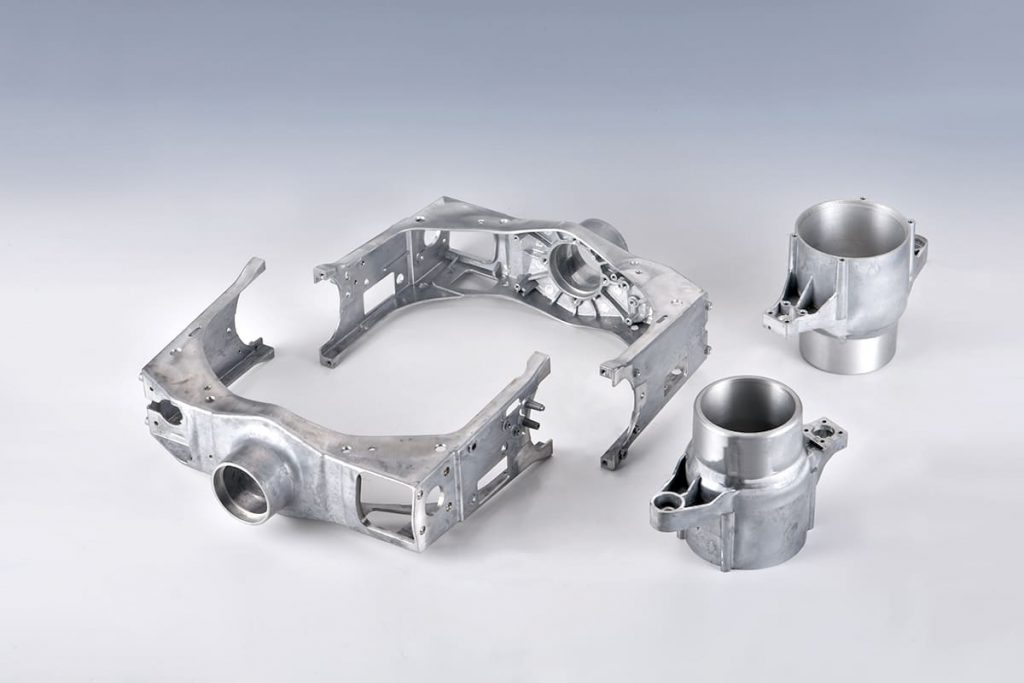
CNC prototyping wins when you need accurate metal geometry, tight tolerances under ±0.05 mm on many alloys, and functional prototypes that must be load-tested. Compared to 3D printing, CNC gives better material properties and repeatability. Compared to die casting, CNC has lower upfront tooling spend and is faster for quantities under a few hundred to a few thousand pieces, depending on part complexity.
When die casting is the right comparison
Use die casting when cycle cost dominates and parts are simple enough to mold economically at volume. Expect lower unit cost beyond the amortized die-price break-even point. Expect higher non-recurring tooling cost and constrained geometry (undercuts, draft angles). Those trade-offs change project math — run a simple payback calculation: (tooling cost) ÷ (CNC part cost − die-cast unit cost) = breakeven volume.
Common pitfalls buyers miss
Designers assume nominal CAD equals finished part; they don’t factor tool deflection, fixturing, or burr removal. Suppliers under-quote inspection and rework. Beware quotes that omit first-article inspection or source-material traceability. Also watch for hidden secondary operations — heat treat, plating, assembly — that add days and dollars.
Supplier checklist — demand these deliverables
Ask for: CAM files and toolpath screenshots, first-article CMM report, material certificates (traceable grade and mill), a clearly stated lead time with penalty terms, and a breakdown of per-part cost at three volumes. If you don’t get these, you’re buying uncertainty. Contracts should fix acceptance criteria and sample count for lot acceptance.
Real-world validation and credibility
I’ve audited production lines in Guangdong’s manufacturing hubs and seen how process control separates outputs: identical CAD, different yield. That hands-on view supports one conclusion — disciplined setup and inspection beat marketing. For projects that pivot between prototype and production, I’ve watched teams move from CNC prototypes to custom die casting when volumes justified tool investment; the transition requires upfront process mapping and tolerance allocation. Use public industry data on regional tooling economies to sanity-check quotes.
Decision patterns — rules I use when advising investors
Rule 1: If functional testing requires final metallurgy or mechanical strength and quantity 5,000, model die-casting economics. Rule 3: If time-to-market under two weeks is mandatory, prioritize suppliers who guarantee quick CAM turnaround and same-day fixture proposals. These rules avoid speculation and force a numbers-first decision.
Negotiation levers that work
Push on material sourcing (buy your own bar stock), consolidate finish steps under one vendor, and fix acceptance tests in the SOW. Ask for trial runs with incremental commitments — pay a premium for a run of 10, then scale to 100 once tests pass. That staged approach limits capital exposure and reveals hidden costs early.
Synthesis — the practical takeaway
You need a measurable procurement plan: set numeric acceptance criteria, run break-even math for tooling, and demand proof of process. If you want a partner that can span prototype through production with clear data, consider a supplier that demonstrates those capabilities; Hanstar fits the profile of firms that present CAM evidence, inspection reports, and production pathways without sales bluster. Choose the approach that preserves margin and shortens uncertainty, not the one that promises convenience.