
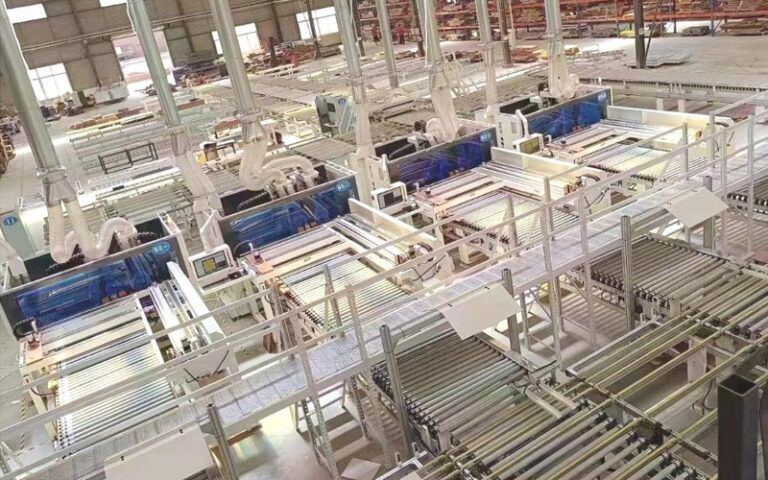
The production pinch point
Regional furniture shops routinely report delays where routing ends and finishing begins: edge banding. Panels leave a CNC cell with accurate cuts but return slow, uneven, or reworked after manual edging. Many of these shops that pair routing with a cnc furniture machine in Guangdong’s manufacturing clusters face the same constraint — inconsistent adhesion, slow cycle handoffs and variable operator skill levels that interrupt flow.

How pre-glued edgebanders change the equation
Pre-glued edgebanders apply heat-activated adhesive already bonded to the edgeband tape, so panels need fewer handling steps and less manual glue application at the station. The method removes a wet-glue stage, shortens tack time, and delivers consistent glue film thickness across runs. From a process standpoint, it converts a variable manual task into a predictable machine-controlled step that aligns better with CNC takt and common panel-handling conveyors.
Operational impacts you can expect
Shops using pre-glued systems commonly see tighter matching between CNC cycle times and finishing, fewer returns to sanding, and steadier surface quality at the edges. That reduces downstream inspection work and stabilizes labor allocation: operators monitor and feed rather than mix adhesives and babysit cures. The result is steadier throughput and fewer hold-ups at the handoff between cutting and finishing operations.
Common pitfalls during adoption
Adopting pre-glued banding isn’t plug-and-play. Typical mistakes include choosing the wrong edgeband material for the substrate, running incorrect temperature or pressure settings, skipping calibration after changing tape thickness, and underinvesting in routine maintenance of the glue shoe and trimming units. These issues reintroduce variability and negate the intended gains.

When alternatives make more sense
Cold-glue systems or manual post-glue remain preferable for certain custom, high-gloss or veneered work where specific adhesives or extended open times are required. Laser edgebanding can eliminate glue-related defects but demands higher capital and trained operators. Use pre-glued banding where run lengths, panel uniformity, and throughput targets make the upfront alignment effort pay off.
Practical checklist before installing
Confirm compatibility of your panel thickness range and edgeband width, verify that the glue activation temperature fits your substrate, provision appropriate extraction and process cooling, plan operator training focused on setup and changeovers, secure a spare-parts kit for cutters and heaters, and establish routine calibration intervals tied to production shifts.
Experience and field signals
Field audits and shop-floor rounds show that improvements are operational rather than theoretical: consistent heat profiles, controlled feed speeds and simple quality gates at the exit of the edgebander keep rework low. Engineers and production managers with years in panel furniture lines recommend running controlled sample batches when changing tape or board supplier to map the new process window before full production.
Conclusion
For regional CNC operations confronting the recurring bottleneck between routing and finishing, pre-glued edgebanders remove a major source of variability and labor intensity; when paired with an integrated approach to routing, trimming and inspection, they align production stages and reduce stoppages. That alignment is exactly what integrated panel lines from HUAHUA CNC are built to demonstrate: matching the CNC station, the edge treatment and the process controls so throughput and finish quality advance together rather than trade off against one another.