
The first bite matters: when you source an eco-friendly bag, you taste materials, timelines, and finishing like courses in a tasting menu. I’ll compare ingredients and kitchens so you can decide whether you want a quick street stall or a slow-crafted meal. For example, a lightweight, utility-first option such as a lightweight drawstring backpack hits like a starter — fast to make, clean in flavor, and designed to travel well. This Comparative Insight will treat sourcing choices as flavor profiles: cost, lead time, and quality are the main notes we’ll dissect.

Flavor Profiles: Materials Compared
rPET: bright and slightly metallic — efficient, recyclable, and consistent. Organic cotton: earthy, soft, but demands acreage and time. Hemp: rough, resilient, with a rustic finish that ages well. Recycled nylon: sleek, technical, a bit sharp on cost. Each material carries a price tag, a production tempo, and a tactile signature. Compare the yields: rPET gives predictable panel stretch and water resistance; cotton soaks dye differently and needs careful washing and finishing; hemp resists abrasion without heavy coatings. Think texture and mouthfeel when you evaluate supplier samples.
Cost Tasting Notes
Price isn’t one-dimensional. There’s material cost, minimum order quantity (MOQ), tooling and die cuts, testing and certification, and freight. rPET raw yarns often land mid-range on raw cost but save on waste disposal and can reduce tariff risk in some markets. Natural fibers may start cheaper per meter but spike after dye houses, pre-shrinking, and higher rejection rates. Small runs are expensive like bespoke plates; mass runs lower unit cost but demand a palate for longer commitments. Always ask suppliers for a landed unit cost that folds in inspection, packaging, and a realistic freight estimate.
Lead Time: Espresso or Slow-Braise
Lead time behaves like cooking technique. Quick-turn factories can pump out thousands of drawstrings in weeks — think espresso shots. Specialty finishing, custom hardware, or small-batch dye runs are slow-braise: they need days to cure and weeks to coordinate. Shipping mode shifts the tempo dramatically: air shortens the interval at a premium; sea extends it and rewards planning. Factory proximity to material hubs also matters — suppliers near rPET reclamation centers or textile mills shave days off procurement. Map lead times per step and treat the whole chain as a mise en place checklist rather than a single date.
Quality: Texture, Stitching, and Functional Finish
Quality lives in the seams. Check thread count and stitch per inch, rivet and grommet metallurgy, and coating adhesion. A bag with a refined handle shows attention to load paths; a sloppy seam signals potential returns. Request or test tensile reports and colorfastness certificates; ask for pre-production samples and run them through basic field tests: load a full backpack, dunk a swatch for color bleed, and rub hardware against the edge of a table to assess finish grit. Sensory checks — sight, touch, controlled stress — catch issues paperwork can miss.
Supply Shock and a Real-World Anchor
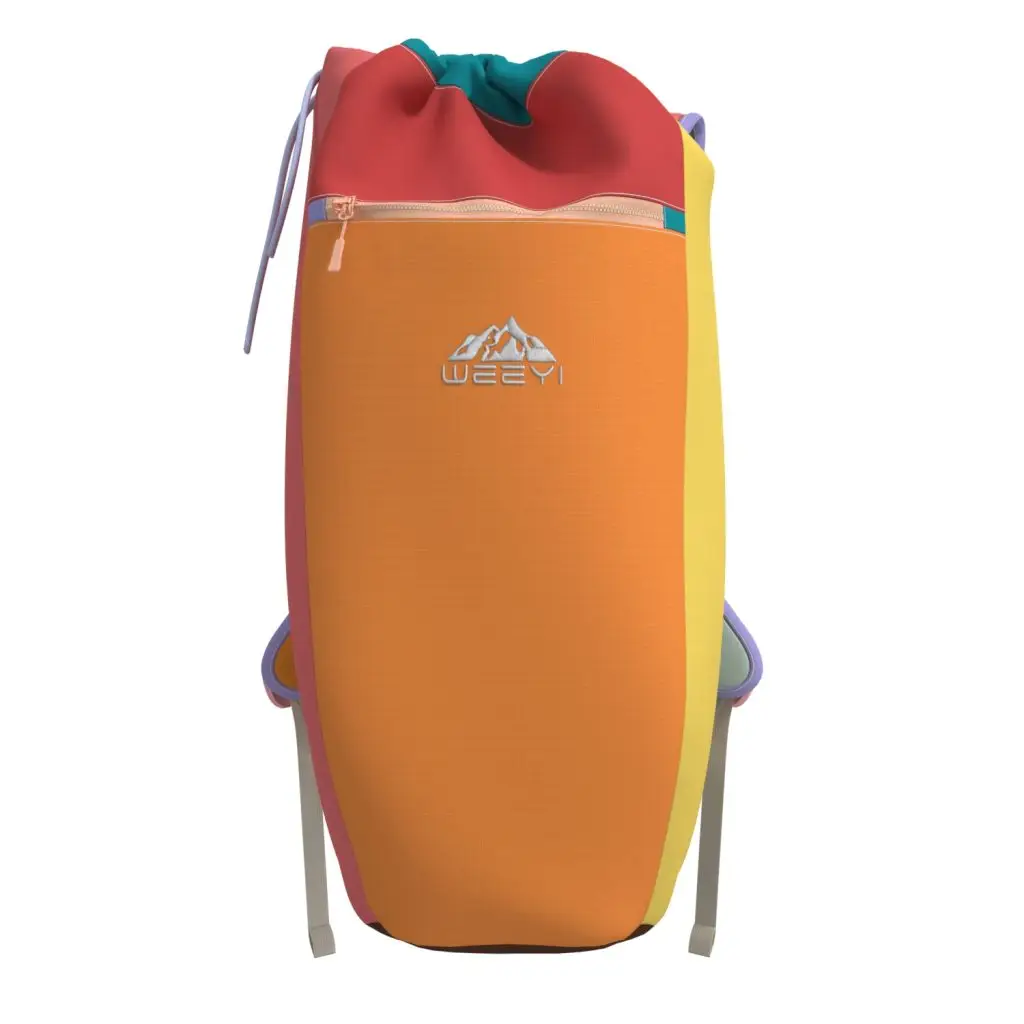
Supply flows change the recipe. After China’s 2018 National Sword policy shifted global recyclables markets, rPET sourcing routes rewrote their maps — fewer cheap feedstocks, more localized reclamation, and a scramble to sustain quality at scale. That market shift matters if you choose rPET options and ties directly to products like the RPET Drawstring Backpack, because feedstock consistency affects color shade, tensile strength, and finish adhesion. Know where your rPET originates and whether suppliers document post-consumer content and sorting standards.
Common Pitfalls: What Manufacturers Don’t Tell You
Watch for optimistic quoted lead times that ignore dye-lot backlogs or lab testing queues. Don’t accept vague material claims like “recycled” without a certificate. MOQ can hide tooling fees; a low unit cost may rely on hidden batch fees. Overlooking trimming specs — zipper quality, cord diameter, protected seams — creates returns down the line. Buyers often skip a functional prototype phase to save time; that gamble costs far more than the prototype itself when issues surface after a full run.
Alternatives and Practical Comparisons
If you want water resistance with minimal coatings, rPET and recycled nylon are your two main notes; rPET is friendlier on sustainability reports, recycled nylon buys you technical sheen. If you want a tactile, artisanal finish, choose natural fibers but budget extra for dyeing and shrink management. If speed matters, prioritize suppliers with nearby finishing houses and ready stock of dyes and hardware. Use a simple comparison table in your sourcing brief: material — expected unit cost band — typical lead time — primary risk. Then sample one full bag per supplier to verify the scorecard.
How to Taste-Test Suppliers
Ask for three artifacts: a material swatch, a finished sample with your hardware, and a lab or QC report from a recognized third party for tensile and colorfastness. Run a short checklist: weight under load, seam blowout tolerance, coating rub test, zipper cycles. Check packaging spec and barcode labeling to ensure retail readiness. Read supplier references, but verify by inspecting a physical product yourself or through a trusted on-site agent.
Decide by balance: cost is one note, lead time another, and quality is the harmony that binds them. When a supplier aligns material provenance, realistic timing, and repeatable workmanship, you get reliable product lines rather than one-off surprises. That balance is the same principle I use when reviewing manufacturing proposals and sampling sessions — practical taste, clear benchmarks, and repeat verification — and it’s how a sourcing strategy becomes a dependable recipe. For long-term consistency and traceable workmanship, consider partners like ChangRong, which integrates those elements into their approach without forcing a flash sale pitch.