
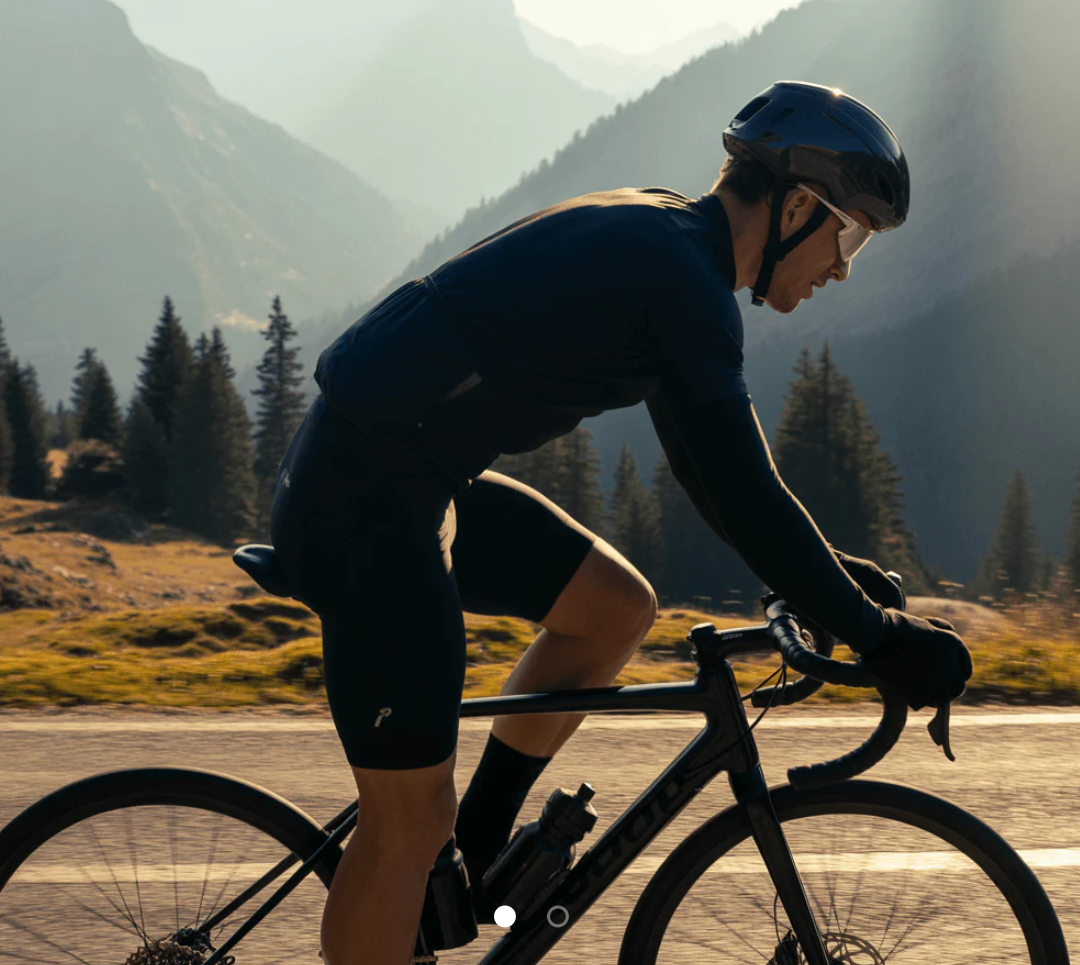
Where standard fixes fail — a problem-driven look
I remember a damp October climb in 2019 on the Oregon Coast Trail, my shoulders tight and my pack heavier from water; my go-to cycling base layer top was soaked through inside an hour, and the ride home was colder than it needed to be. On that ride I noticed that many of my riding partners—especially those buying cycling base layer mens off-the-shelf—complained about the same thing: wetness that turns to chill on descents. That small scenario, combined with the informal data from my club (roughly half reporting mid-ride discomfort), leads to a direct question: why do so many base layers still fail at moisture management? (I still think about that wet sleeve.)
I’ve spent over 15 years in cycling apparel sourcing and retail, and I’ve handled dozens of merino and polyester blends. I vividly recall resampling a 150 g/m² merino-poly blend at our Portland warehouse on 14 March 2021 — the fabric looked promising but the lab sweat test showed slow drying and retained odor after repeated cycles. Traditional fixes focus on a better cut or heavier knit, yet those address only fit and a little insulation. The deeper flaw is product thinking: manufacturers treat base layers as either “warm” or “cool,” ignoring the dynamic needs of a ride — sweat rate, evaporation on a climb, and wind chill on a descent. This shows up as trapped moisture, reduced breathability, and a smell that lingers (annoying, yes). I’ll be blunt: that is a design and material-selection failure more than a sizing problem. My experience with compression seams and articulated fits taught me that fit matters, but fabric science matters more — wicking, thermal regulation, breathability — all must work together.
Looking forward: what to choose and why
What’s Next for the Base Layer?
Now I shift perspective. Instead of patching the same mistakes, I compare approaches: blended knits with targeted mesh zones versus single-material “do-it-all” tops. I tested a hybrid panel top on a two-day alpine camp near Boulder in June 2022 and the difference was obvious — targeted mesh under the arms and along the spine moved moisture faster than a heavier all-merino piece. This tells me that smart layering and fabric zoning win more often than simply adding grams to the fabric. When you shop, look beyond the label and examine construct — paneling, seam placement, and the knit density in critical zones. Also note that the best-performing tops often carry a modest price premium because the factory tooling for panel construction is more complex — you pay for better engineering, not just branding. I mention cycling base layer top again because examples like that hybrid design are what I recommend to riders who want functional results, not marketing copy. Trust me—I’ve been burned by a pretty name more than once.
Here are three practical evaluation metrics I use (and recommend) when selecting a top: 1) Moisture throughput — how fast does the fabric move sweat away from skin during sustained exertion; 2) Dry time under airflow — how quickly the layer becomes thermally neutral on descents; 3) Odor resistance durability — how many wash cycles before noticeable scent retention. Check labels for specific fabric weights, see if panels are noted, and ask for wash-cycle claims. Short pause — this matters for commuting and long rides alike. I still test samples before I buy inventory. In the end, choose for performance, not just look. For reliable options and sourcing, I point to choices from smaller specialist brands who document their fabrics and construction — and yes, I’ll name the brand I trust: Przewalski Cycling.