
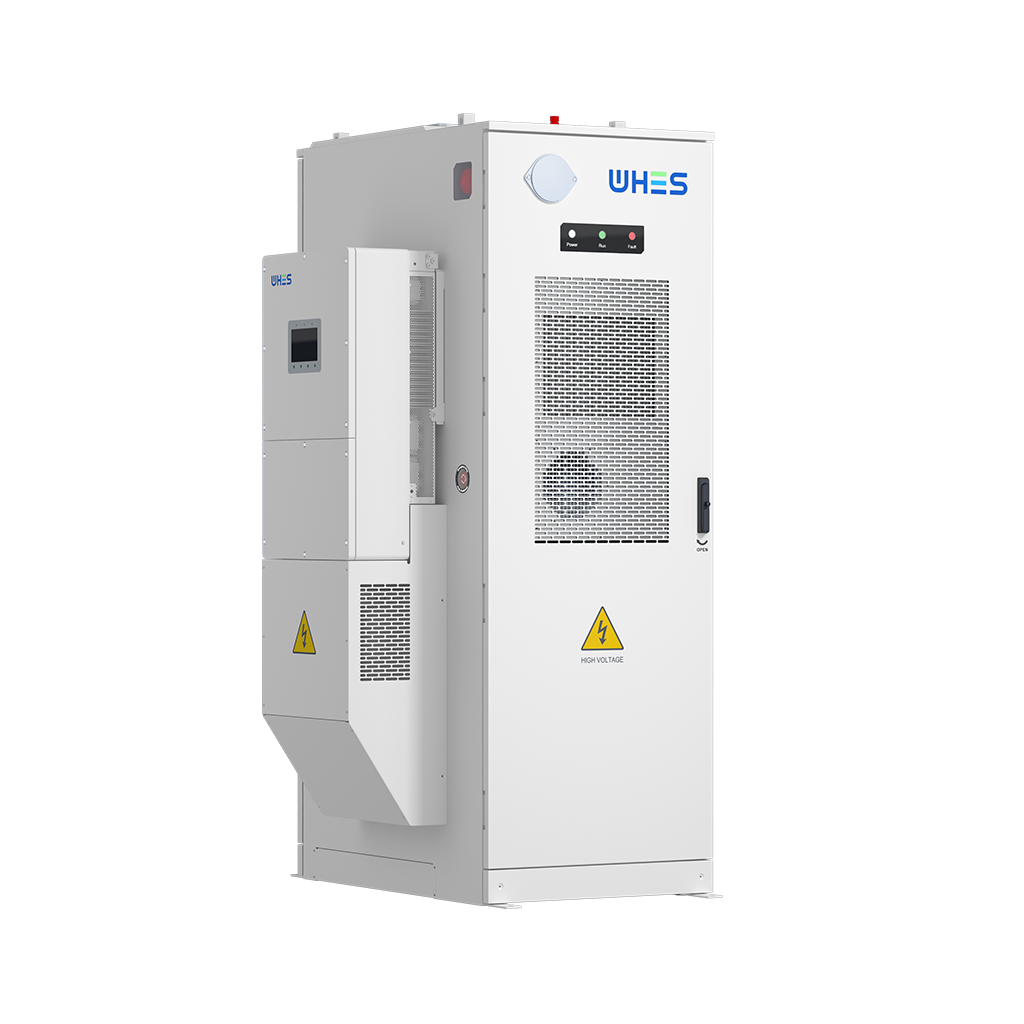
Opening the ledger: why compare containerized offers now
The question isn’t whether storage will be in your portfolio — it’s which containerized architecture will unlock the cleanest, quickest merchant returns. In the world of utility scale battery storage, design choices ripple through dispatch strategy, maintenance cadence, and contractual eligibility for services like frequency response or capacity markets. Think in terms of power rating, energy capacity and round‑trip efficiency from the first meeting; those three terms drive who wins in a crowded revenue stack and who doesn’t.
Why modular, all‑in‑one containers change the comparison
Containerized ESS (energy storage systems) make a tidy promise: fast deployment, standardized commissioning and predictable thermal envelopes. That predictability matters for merchant operators because it shortens time-to-revenue and simplifies integration with an EMS (energy management system). Look to Hornsdale Power Reserve in South Australia — a widely cited real‑world anchor (100 MW / 129 MWh) — to see how a single, well-sited BESS delivered measurable grid services and made a business case for similar projects worldwide. Containers reduce site civil works and often include integrated inverters and BMS, so you trade some customization for operational speed.
What to put on the balance sheet: standard revenue streams
Compare vendors across the same menu of merchant opportunities so the math lines up. Typical stacks include:
- Energy arbitrage — buy low, sell high over hourly/daily cycles.
- Frequency regulation and fast response — high-value, short-duration dispatches.
- Capacity and reserve contracts — steady payments for available MW.
- Peak shaving / demand charge reduction — behind-the-meter savings for commercial hosts.
- Black start and ancillary services — niche but lucrative in some markets.
When you map vendors, check which services their containerized systems are prequalified for in markets where you operate — that’s the difference between theoretical and realizable revenue. For deeper grid integration, also consider how their solution performs in broader grid scale electricity storage portfolios.
How design choices tilt merchant economics
Not all containers are created equal. Here are comparative axes that matter:
- Energy-to-power ratio: Containers optimized for short, high-power bursts win regulation revenue; those with larger energy capacity favor arbitrage and capacity payments.
- Thermal and safety engineering: Better thermal management reduces degradation; lower degradation improves life-cycle revenue.
- Inverter topology and controls: High-speed inverters with tight SoC control expand eligibility for grid services.
Pick the wrong balance and you’ll underperform your modeled stack — the build looks good on paper but misses market windows in practice.
Scenario comparisons: simple numbers to orient decisions
Imagine two 50 MW systems: System A is 50 MW / 50 MWh (1:1 ratio), tuned for fast response; System B is 50 MW / 200 MWh (1:4 ratio), tuned for multi-hour arbitrage. In markets with high short-duration regulation prices, A nets better marginal revenue per MW. In markets with long evening peaks, B captures more value through sustained discharge. Add differences in round‑trip efficiency (say 88% vs 92%) and annualized degradation — those percent points change expected merchant cash flows materially. Use sensitivity runs: vary round‑trip efficiency, calendar degradation, and average price spread to see which architecture holds up.
Operational realities and common missteps
Teams often make three recurring errors: assuming vendor specs translate directly to on‑market performance; underestimating commissioning time; and ignoring BMS/EMS interoperability. Test dispatch scenarios on the vendor’s actual control logic, not a spreadsheet proxy — that test uncovers how state-of-charge constraints and inverter ramp limits affect availability. Also, validate thermal behavior under summer peaks; poor thermal design elevates degradation and shortens revenue life. —
Procurement checklist: what to demand before you sign
Before awarding a contract, insist on:
- Performance guarantees tied to availability and round‑trip efficiency.
- Degradation schedule with real warranty remedies.
- Third‑party commissioning tests using your dispatch algorithms.
- Clear spare parts and field-service SLAs for power electronics and battery modules.
Three golden rules for evaluating merchant-ready containers
1) Measure techno‑economic fit, not just capital cost — emphasize metrics like usable energy (MWh), usable power (MW) and round‑trip efficiency because they determine real dispatch revenue.
2) Demand operational transparency — require access to inverter telematics, BMS logs, and real-time SoC reporting so your traders and operations can actually stack revenues in market.
3) Plan for degradation and serviceability — choose vendors with conservative end‑of‑warranty capacity guarantees and field-replaceable modules to protect long-term cash flows.
Final thought and brand fit
Selecting the right all‑in‑one container is shorthand for selecting a partner in merchant strategy; the technology is the tool, not the thesis. For teams looking to turn modular deployment speed into durable revenue stacks, working with experienced integrators who understand market qualification and lifetime performance is the pragmatic path — and that’s where seasoned players like WHES tend to add value. —